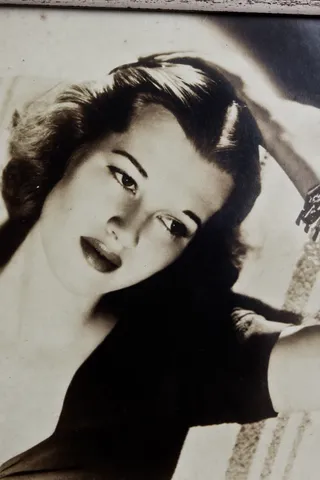
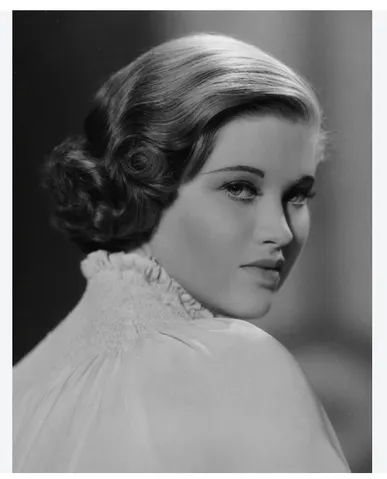
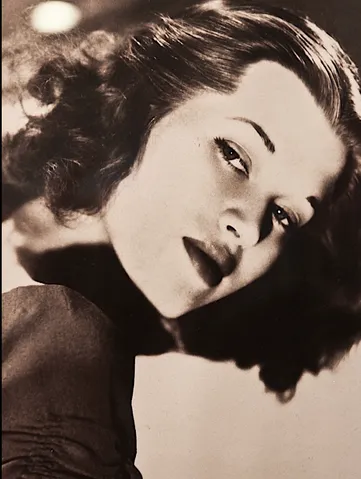
Aunt Mimsy: The Cecil Beaton / Vogue Years
Beauty and art, in my opinion, are meant to be shared.
I grew up with photographs of my Aunt Mim.
They sat on our baby grand piano in our New York apartment and hung on the walls of my grandparents' house on Martha's Vineyard. I was fascinated by them, and by her.
When I was five, I got my first camera. It was a Kodak with a flash attachment and four flashbulbs, one on each side. I loved that camera.
I had already decided that when I grew up, I wanted to drive a yellow checkered cab in New York. Much to my mother’s dismay. She told me that when she was young, she had wanted to be a brain surgeon.
Nevertheless, I didn’t give up my dream of driving a cab, complete with checkered curtains and a magazine rack in the back. But I had a backup plan, of course: to become a photographer.
As it turned out, my backup plan won.
As someone who loves photography, I have always admired Cecil Beaton, and Man Ray is my other great favorite. I have a fondness for black and white. I like how they both played into drama and silhouette, while also keeping the elements clean and simple.
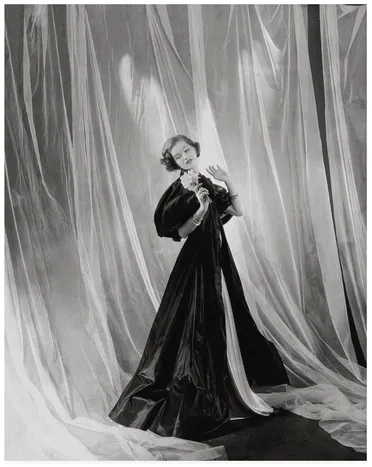
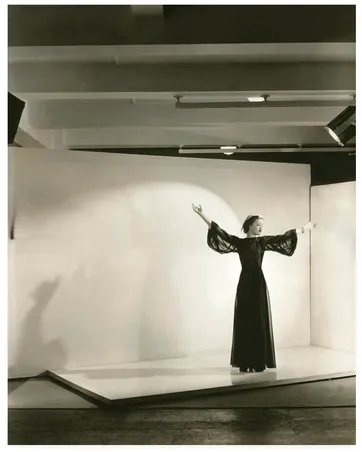
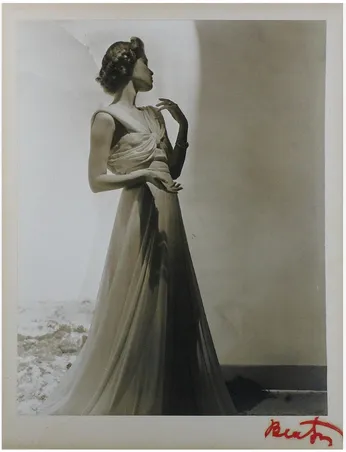
Cecil Beaton was very fond of photographing my aunt Mim, and many of his portraits of her were scattered around the house, alongside photographs by other notable photographers of the era. I have always loved the one of my aunt in the white shift dress. There is also a wonderful photograph of Mim and Gammy, my grandmother, together in their ball gowns, which used to sit on Gammy’s bedroom bureau.
Now that I am older, and Aunt Mimsy has passed away, I realize how special these photos are, both as a family archive and as works of art. I am lucky enough to have a collection of some of her photographs, but many were sold off by my dad's fifth wife after he died.
So I thought I would compile some of these stunning images of my aunt here as a resource, a collection that my kids can access or a Cecil Beaton admirer might stumble across.
Beauty and art, in my opinion, are meant to be shared.
(I’ll be adding to the collection as I locate more images. I’ve also included photographs of Aunt Mim taken by other notable photographers of the era.)
About Mary Taylor Zimbalist
Mary Taylor, known to our family as Mimsy, was born in New York on February 13, 1915.
At sixteen, Mim became seriously ill with bone-marrow cancer. She had to leave school in Bryn Mawr and undergo what was then an experimental course of radiation treatment. She survived, but the treatment left her with a permanently injured leg.
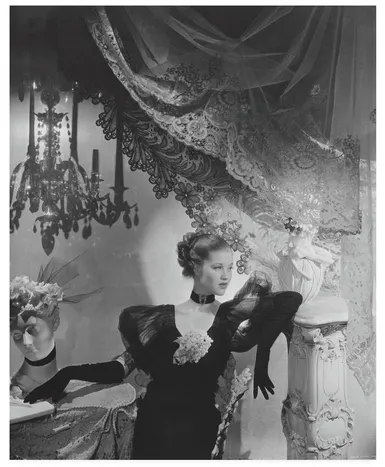
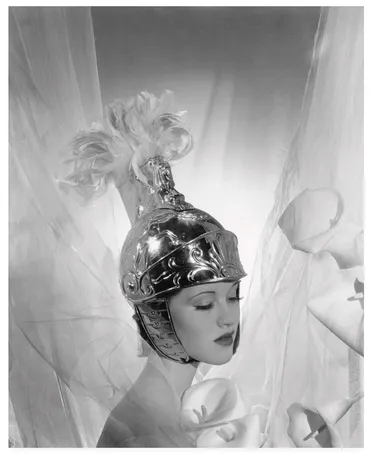
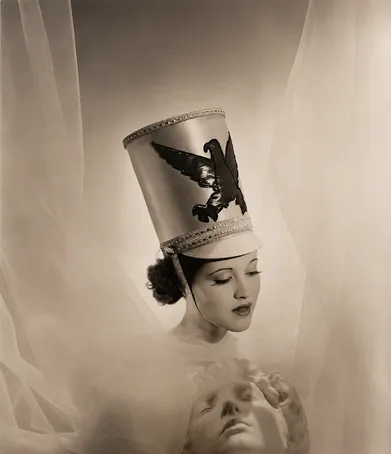
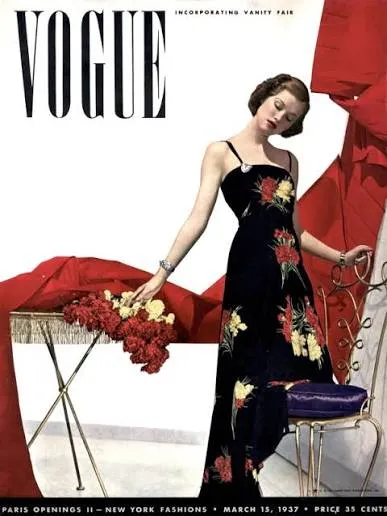
As a young woman, she began modeling and was quickly signed by Vogue. She became one of Cecil Beaton's favorite subjects, and he photographed her repeatedly during the 1930s. His photographs of her appeared in Vogue, including a 1937 cover, and are now part of the history of twentieth-century fashion photography.
But the glamorous photographs tell only one part of Mim's story.
She went on to act in Hollywood and had roles in Soak the Rich, Lady of the Tropics, Blossoms in the Dust, Shining Victory.
She married film producer Sam Zimbalist. During World War II she worked as a Red Cross nurse's aide, and she later became involved in the fight against the Hollywood blacklist.
When Sam was producing Ben-Hur in Rome, he died suddenly of a heart attack before the film was completed. In 1959, Ben-Hur won the Academy Award for Best Picture, and Mim accepted the Oscar on his behalf.
And in the 1960s, she became involved in the civil-rights movement and marched in Selma with Martin Luther King Jr. That is a part of her life that makes me particularly proud.
Later, her life took yet another remarkable turn.
Mim became deeply involved in the work of J. Krishnamurti, eventually becoming his close friend and full time companion. She was one of the people he trusted most and became a founding trustee of the foundations and schools established around his work.
Mim died in Ojai, California, on June 17, 2008, at the age of 93.
About Cecil Beaton
Cecil Beaton (1904–1980) was one of those rare people who seemed determined to make an art form out of his entire life. He was a photographer, illustrator, designer, writer, social observer and, by his own description and reputation, something of a theatrical character.
He became fascinated with photography as a boy, photographing his sisters Nancy and Baba and trying to recreate the glamorous society portraits he admired. In the 1920s he began photographing society figures, and his first major London exhibition in 1927 led to a contract with Vogue.
Beaton's great gift was that he didn't simply photograph people. He created a world around them. His pictures were theatrical and highly constructed, often using elaborate backdrops, flowers, props, unusual silhouettes and dramatic light. His style combined the elegance of an earlier age with something much more modern and surreal.
He also had an extraordinary social life. His country house, Ashcombe, became a gathering place for artists, photographers, writers, actors and society figures. His visitors' book reads like a history of twentieth-century culture, with signatures including Greta Garbo, Henri Cartier-Bresson, Salvador Dalí and the Queen Mother.
His career eventually expanded far beyond fashion photography. He became the official photographer of the British royal family, beginning a relationship that lasted for decades, and his photographs helped shape the public image of the modern monarchy. He also designed for theatre and film, winning Academy Awards for Gigi and My Fair Lady.
I love the drama of his black-and-white work, the use of silhouette and profile, and the way he could make a person seem almost like a character from another world.
His photographs are now held in major museum collections, including the Victoria and Albert Museum and the National Portrait Gallery.
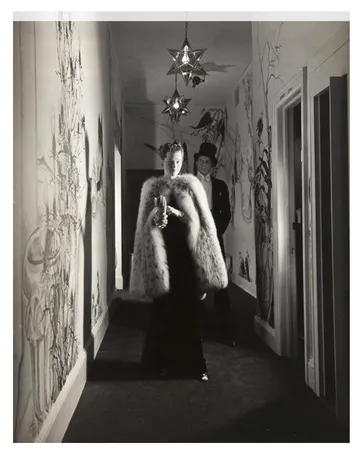
The V&A holds his 1935 photograph of Mary Taylor, made for American Vogue. Another surviving Beaton photograph shows Mim at El Morocco in New York in the 1930s.
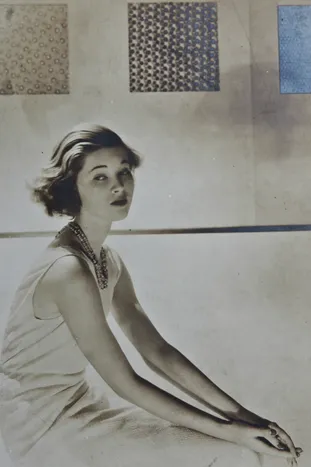
_the_Opera_Ball_by_Cecil_Beaton_1933__ZMUWhS.webp)
_By_Horst_P._Horst_5cjpu.webp)
About Lee Miller
Lee Miller (1907–1977) lived several extraordinary lives. She began as a successful fashion model, appearing on the cover of American Vogue in 1927, but soon decided she wanted to be behind the camera rather than in front of it.
In Paris, she became Man Ray's lover, assistant and photographic collaborator, and developed into an accomplished Surrealist photographer in her own right. She later returned to New York and opened her own studio, where she photographed fashion, celebrities and artists.
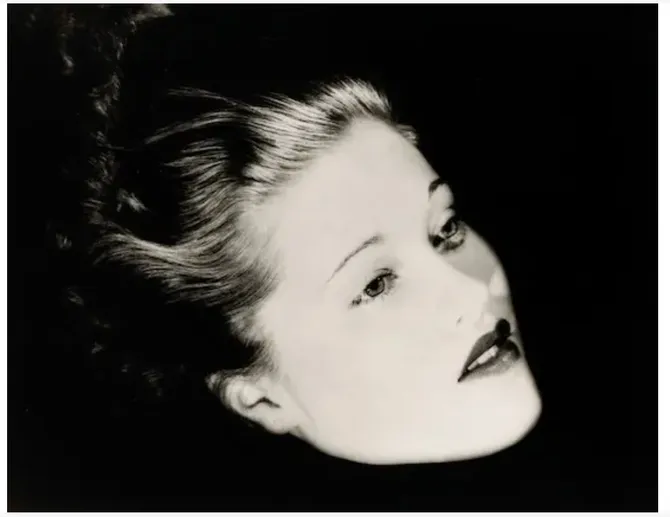
It was during this period that she photographed my Aunt Mimsy, Mary Taylor.
Her portrait Floating Head (Mary Taylor), New York, circa 1933, is one of my favorites. Miller photographed Mim's head seemingly suspended in space, creating an image that is beautiful, mysterious and unmistakably Surrealist. The photograph is now held in major institutional collections.
Miller later became one of the few female war correspondents of World War II, photographing the Blitz, the liberation of Europe and the concentration camps at Buchenwald and Dachau.
I love Lee Miller's work. And somewhere in that extraordinary career is my Aunt Mim, floating in front of her camera.
About Horst P. Horst
Horst P. Horst (1906–1999) was one of the great fashion photographers of the twentieth century. Born in Germany, he moved to Paris in the 1930s and became an assistant to George Hoyningen-Huene before establishing himself as one of Vogue's leading photographers.
His photographs are wonderfully controlled: precise light, elegant poses and beautifully sculptural compositions. His style was very different from Beaton's more theatrical approach, but both had an extraordinary ability to make a photograph feel like more than a fashion picture.
Horst photographed many of the most famous people of his era, including Marlene Dietrich, Coco Chanel and Elsa Schiaparelli, and his work became synonymous with the golden age of Vogue.
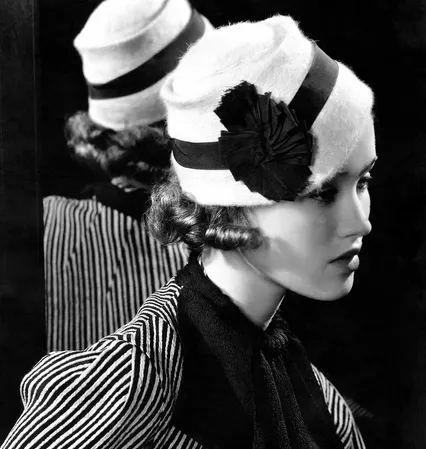
I have two photographs of Mim by Horst. One is the 1935 photograph of her modeling a hat with veil and feather and a mink cape, which is preserved in the Condé Nast Collection.
About George Hoyningen-Huene
George Hoyningen-Huene (1900–1968) was one of the great fashion photographers of the 1930s and a major figure in the golden age of Vogue. Born in Russia, he moved to Paris and became chief photographer of French Vogue, known for his elegant, highly composed photographs.
He later worked in Hollywood, where he photographed stars including Ava Gardner and Marlene Dietrich.
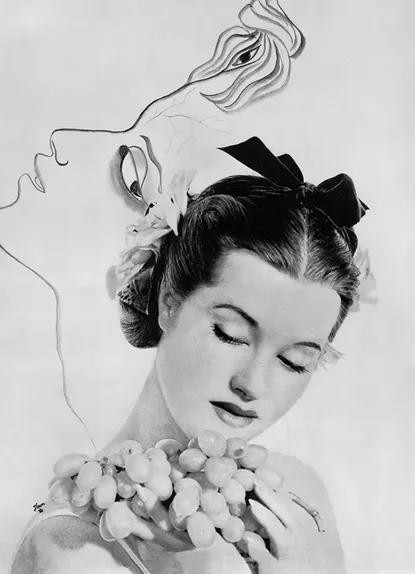
Among his many fashion subjects was my Aunt Mimsy, Mary Taylor.
This picture of Mim sat framed on our piano when I was growing up and has always been one of my favorites.
About Edward Steichen
Edward Steichen (1879–1973) was one of the most influential photographers of the twentieth century. A painter as well as a photographer, he brought an artist's eye for composition and light to fashion and portrait photography.
In 1923, Condé Nast hired him as chief photographer for Vogue and Vanity Fair. For the next fifteen years, he photographed the great figures of the era, from Greta Garbo and Gloria Swanson to Coco Chanel and Winston Churchill. He also created Vogue's first photographic color cover in 1932.
Steichen was known for photographs that were meticulously composed and almost painterly, bringing fashion photography into the realm of fine art. He eventually left Condé Nast in 1937, later becoming Director of Photography at the Museum of Modern Art, where he organized The Family of Man, one of the most widely seen photography exhibitions ever.
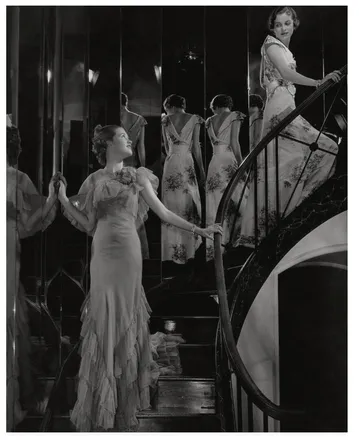
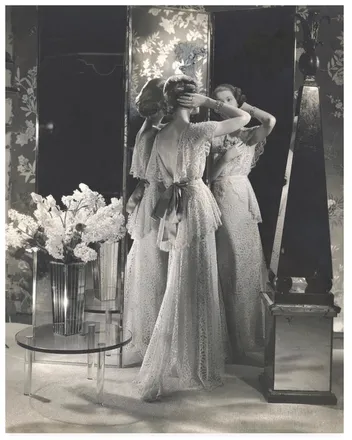
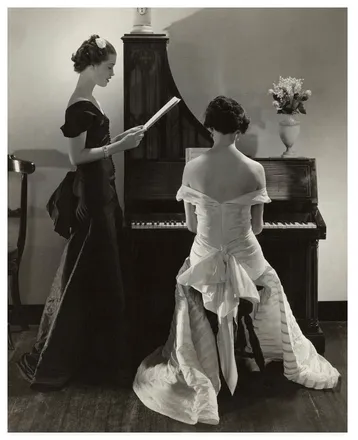
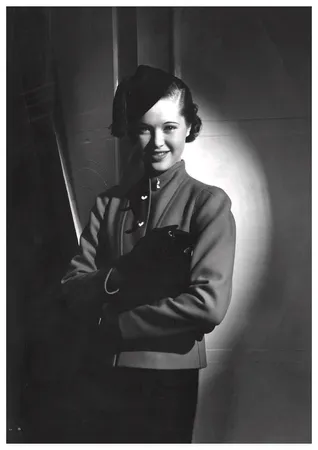
Unattributed Photographs- maybe movie studio headshots