The Pleasure of Isabela
Isabela was my favorite of the Galápagos islands, and fittingly, it was the last one we visited.
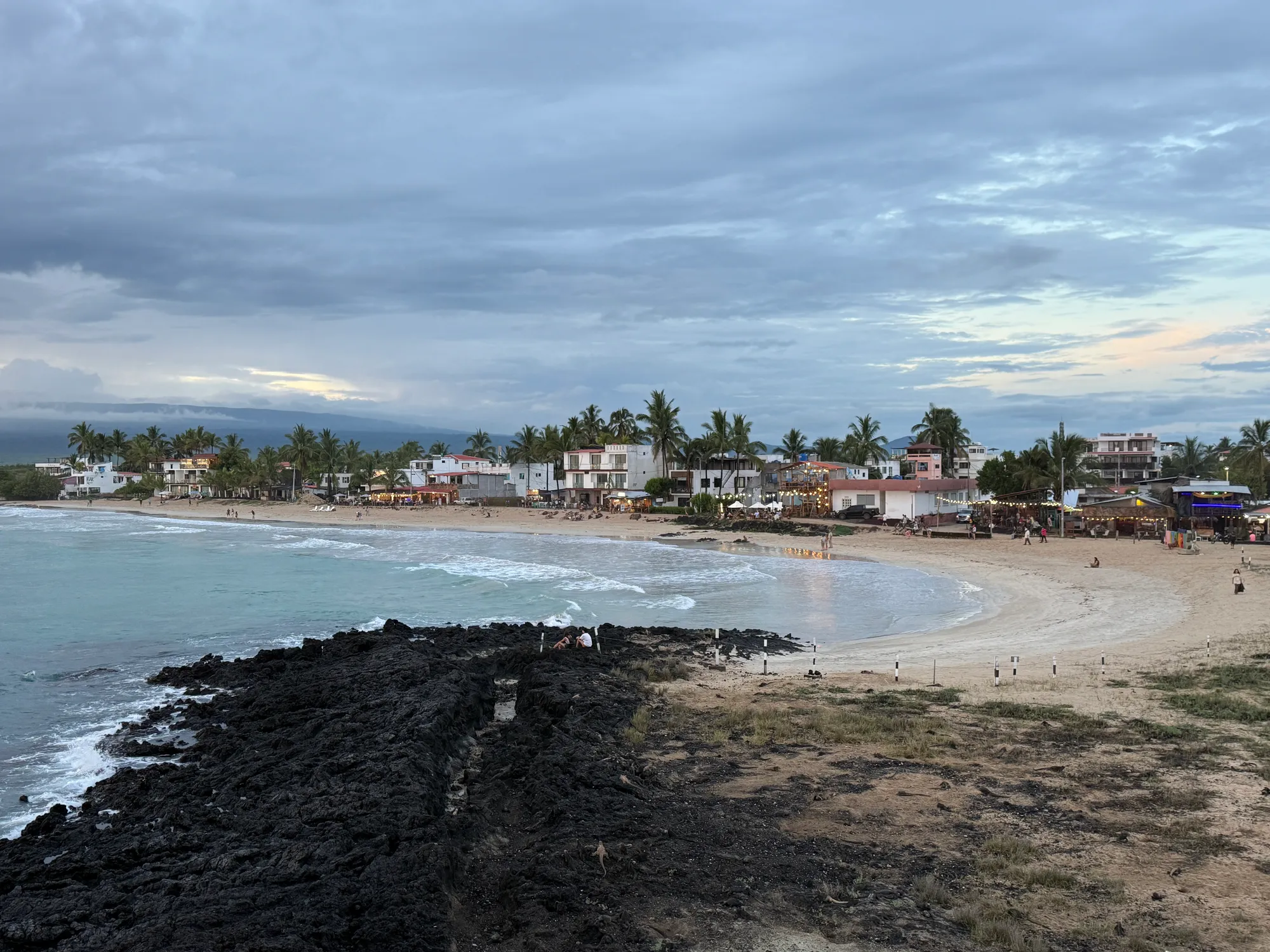
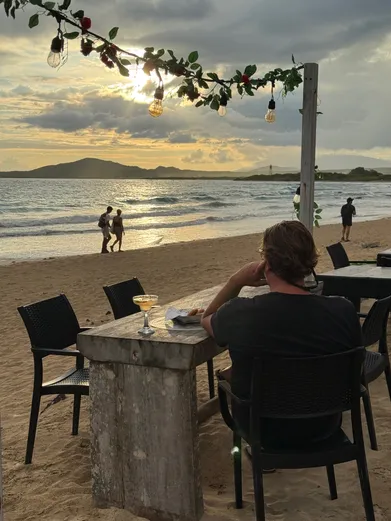
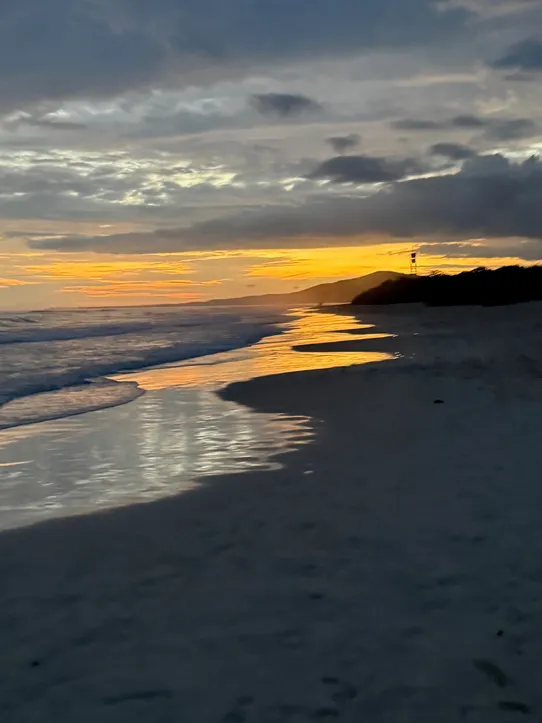
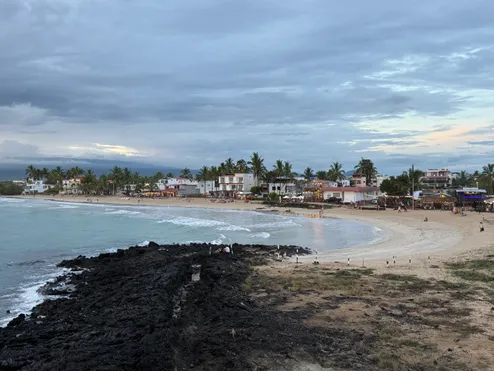
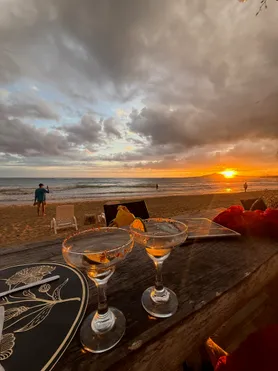
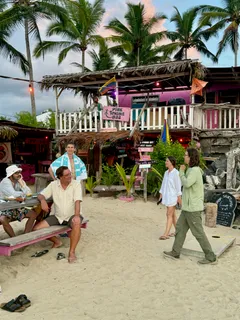
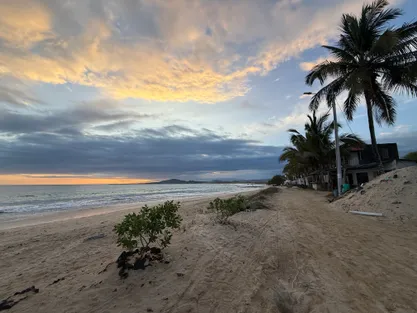
The main town has a sweetness to it that I loved immediately. A long stretch of white sand runs along the water, the kind of beach that makes you want to wander down barefoot and stay all afternoon. Little very rustic beach cafés line the shore, tables spilling onto the sand, and by late afternoon, there were plenty of two-for-one margaritas being poured as everyone settled in to watch the sun sink into the Pacific.
It was easy to fall into island time here.
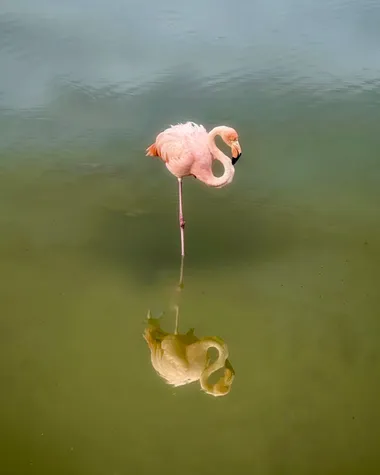
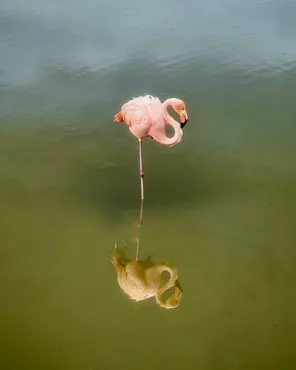
And then, almost unbelievably, just behind the town is a lagoon where pink flamingos wade through the shallows. There is something wonderfully surreal about it: a sleepy little island town, a white beach in front, and these elegant pink birds moving through the lagoon behind it.
But my favorite day on Isabela was out on the water.
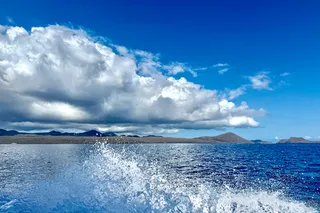
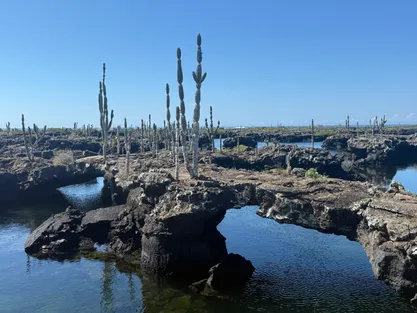
We took a boat trip to Los Túneles, a remarkable landscape of black volcanic rock shaped by ancient lava flows. The formations rise from the turquoise water in arches, bridges and little channels, creating a maze that feels almost otherworldly. The volcanic landscape is so beautiful in its rawness, with dark rock, bright blue water and little pockets of green all meeting at the edge of the sea.
Then we got into the water.
Within minutes we were swimming alongside turtles. Dozens of them seemed to be everywhere, gliding calmly through the clear water. We spotted rays moving beneath us and sharks slipping through the deeper channels, while above us blue-footed boobies perched on the rocks, their ridiculous little blue feet making them impossible not to love.
It was one of those days when you keep thinking, surely this can't get any better, and then it does. Isabela is special, it feels quiet and still not fully discovered.
Of all the places we visited in the Galápagos, Isabela stayed with me the most. Perhaps it was the combination of the wild volcanic landscape and the gentle little town, the flamingos behind the beach, the cafés and two-for-one margaritas at sunset, and the extraordinary life beneath the water. It was a location to linger for a while if you are remote working and don't mind a sleepy little town. If you're after more action head to Santa Cruz or San Cristóbal.
Isabela tips
Swim & snorkel at Concha de Perla
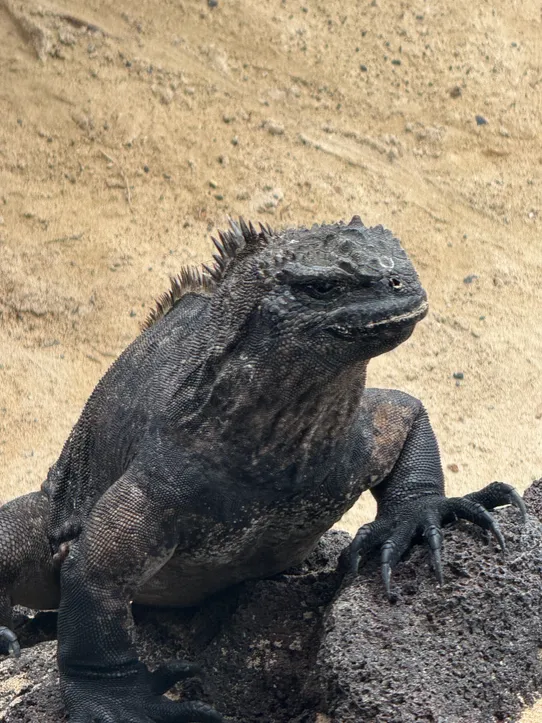
This is the one you're thinking of. It's a beautiful natural seawater pool just a short walk from Puerto Villamil, reached via a little boardwalk through the mangroves. You can climb straight into the water and snorkel. Sea lions, turtles, rays, marine iguanas and, if you're lucky, penguins and white-tipped reef sharks can be seen here.
Stay a few nights
I'd definitely say don't do Isabela as a day trip. It's the island where you want to slow down. The long beach, little cafés, sandy streets and wildlife around town are part of its charm.
Sunset drinks on the beach
The beach runs right along Puerto Villamil, with cafés and bars where you can settle in with a cocktail and watch the sun go down.
Los Túneles
If you have time for one big boat excursion, this is the one I'd highlight. The lava formations are spectacular, and the snorkeling can include turtles, rays, sharks, penguins and seahorses.
Wall of Tears
Rent a bike and make a day of the road out to the Muro de las Lágrimas. The route passes beaches, viewpoints and wildlife, and the landscape becomes increasingly wild as you leave town.
Flamingos without a tour
The lagoons just behind Puerto Villamil are an easy walk from town. Go early or late in the day when the light is lovely and look for flamingos feeding in the shallow water.
A few things to know about Isabela
It is HUGE.
Isabela is the largest island in the Galápagos, covering about 4,600 square kilometres. It is roughly 100–120 km long and accounts for around 60% of the total land area of the archipelago. Even more remarkable, it is larger than all the other Galápagos islands combined. Its distinctive seahorse shape was created when six enormous volcanoes merged together. Five of those volcanoes remain active.
And yet, despite its size, only around 2,000 people live here. Most are around Puerto Villamil, which gives the town its wonderfully sleepy, end-of-the-world feeling.
A little history
Puerto Villamil was founded in the late 1800s when Antonio Gil arrived with his family and began farming. The settlement later became associated with a lime-production operation, using coral collected from the coast. Before that, Isabela's remote coves were used as anchorages by pirates, whalers and other seafarers. Darwin himself visited Tagus Cove in 1835.
Getting there and away
If you arrive from Santa Cruz, the public speedboat takes about 2 to 3 hours, depending on the sea. The official National Park information lists the Isabela-to-Santa Cruz crossing at roughly 2½ hours, with a 6:00 am departure.
And this is useful to know when planning your trip: San Cristóbal has its own airport with flights to the mainland, while Santa Cruz's airport is actually on nearby Baltra Island. There isn't a direct regular ferry from Isabela to San Cristóbal. To go by boat, you generally have to travel via Santa Cruz, making it a much longer journey.
If you're flying home from San Cristóbal, I'd seriously consider taking the little inter-island plane from Isabela rather than spending most of a day on two boats. If you're flying from Baltra, the ferry back to Santa Cruz is the straightforward option but it is a long day and an early start.