Victor Delfin
Delfín has described the house as a kind of second skin, a place that grew around him over the decades.
Sleeping in Víctor Delfín's House: Second Home
I've never understood the appeal of staying in a chain hotel where you could wake up, look around, and have no idea what city or country you're in. I'd much rather take a humble place with character, history, and a few rough edges than somewhere polished to the point of anonymity.
Second Home has character in spades.
My kids and I were lucky enough to stay here for a few days, and if you like funky inns with personality, eccentricity and a little oddity, I highly recommend Víctor's house.
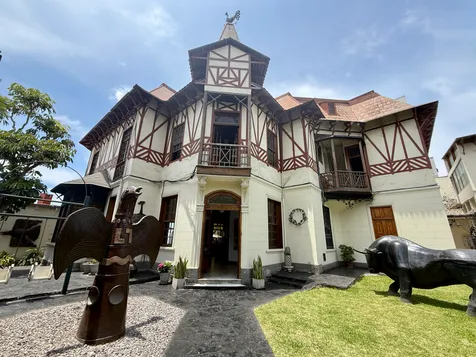
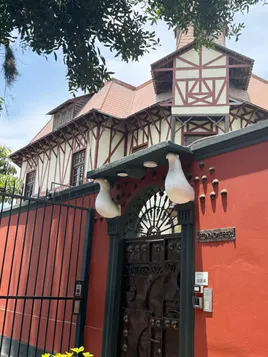
Because this isn't really a hotel at all. It is the home and studio of Peruvian artist Víctor Delfín.
The original house was a rather grand Tudor-style mansion in Barranco, perched dramatically above the Pacific. When Delfín bought it in 1970, it had been abandoned and was close to being demolished. Rather than simply restore it as a house, he began transforming it into something that reflected the way he wanted to live and work: part home, part studio, part gallery and part gathering place. Over the years he added spaces and terraces and filled it with the things that occupied his imagination.
Delfín has described the house as a kind of second skin, a place that grew around him over the decades. And you can see exactly what he means. Nothing feels overly designed. Things have accumulated. The house has aged. The art and architecture seem to have grown into one another.
In fact, from the beginning the Casa Taller was intended to be more than a private home. When it opened in 1970, it functioned as a gallery, workshop, lodging and cultural forum, hosting exhibitions, recitals, lectures and gatherings. Delfín even imagined a library, film club and theatre there. Artists and writers came and went, and the house became part of Barranco's cultural life.
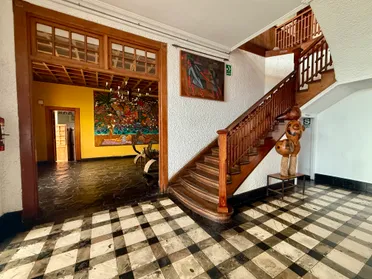
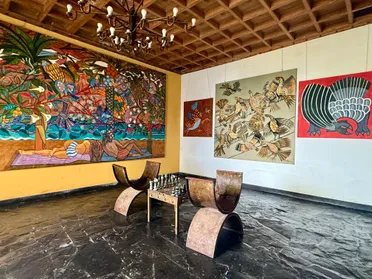
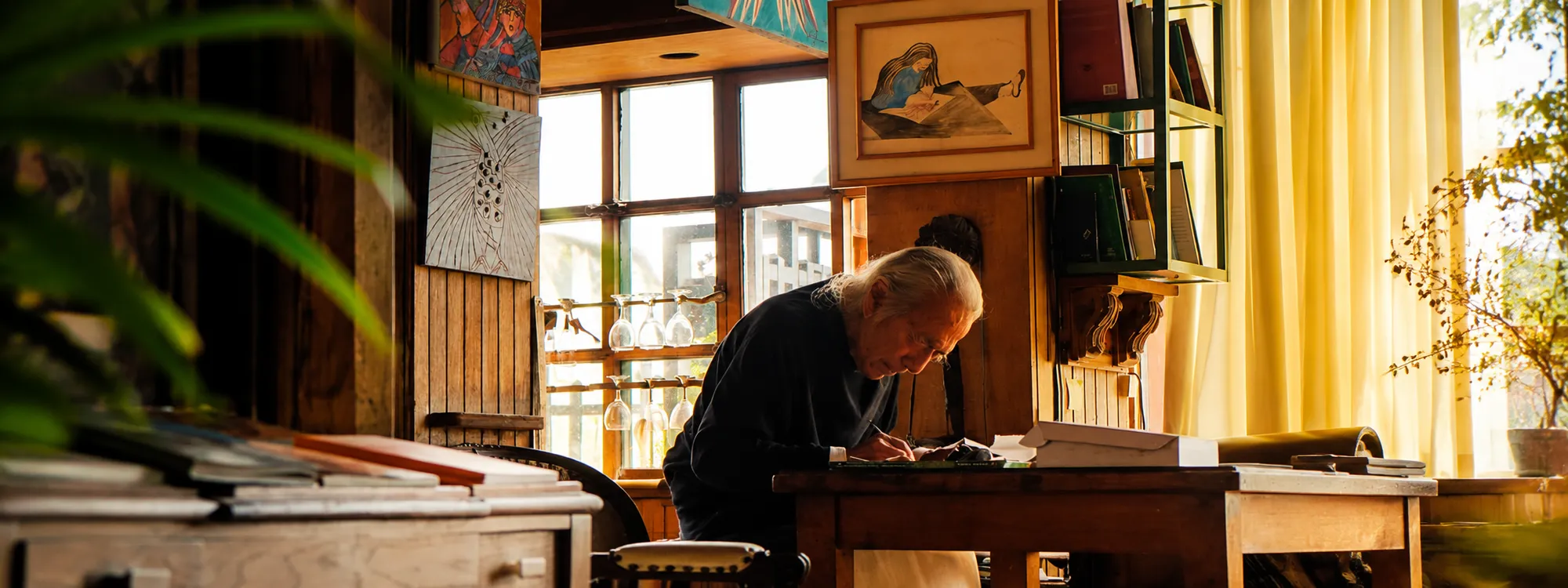
He still lives here.
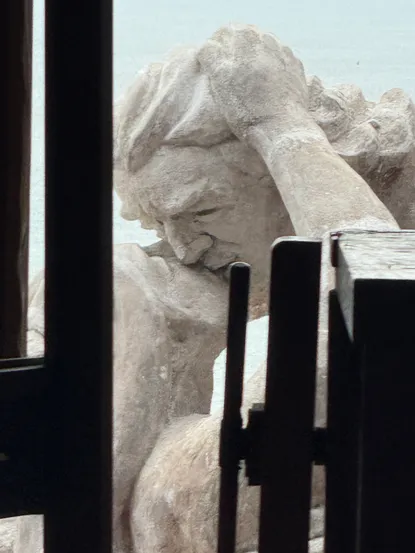
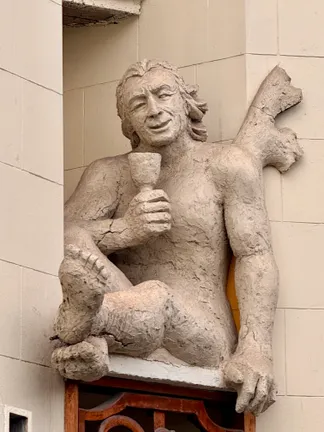
Delfín, now 98, has his home above the pool area and continues to work in his studio. His presence is everywhere, even when he isn't. Sculptures appear in unexpected corners, on walls, in gardens and, of course, around the pool. There are birds and horses, lovers and mythical creatures. Some are playful, some strange and some distinctly risqué. There is a sensuality to much of the work that makes you suspect Delfín has always had a deep and rather vigorous appreciation for women, beauty and the pleasures of life.
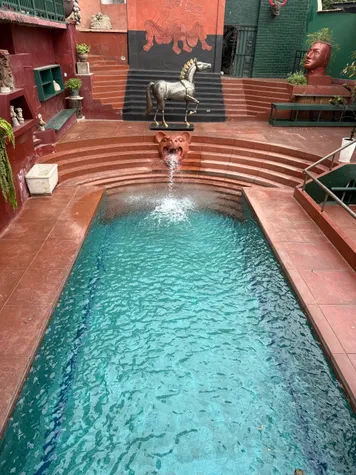
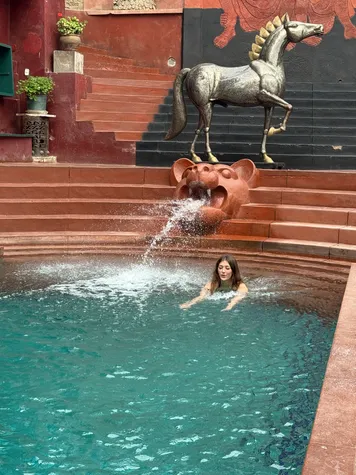
The pool area is spectacular. And if you stay at the inn, you can use it, which is a very good reason to stay. It is funky and slightly surreal, surrounded by Delfín's work, with the Pacific stretching out beyond it.
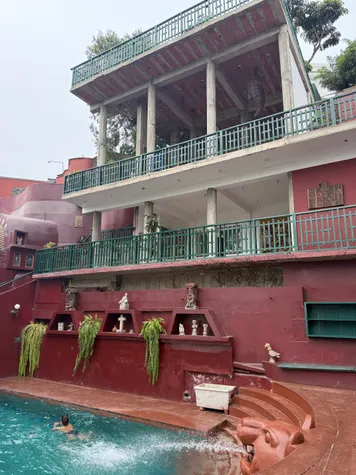
If you're just popping in for a drink or coffee, you can sit downstairs in the main house or outside on the cliff edge and look out over the Pacific. And Barranco is one of those neighbourhoods where you don't really need to plan very much. Some of my favourite restaurants are just down the street, so you can have a drink at Second Home and wander off to dinner.
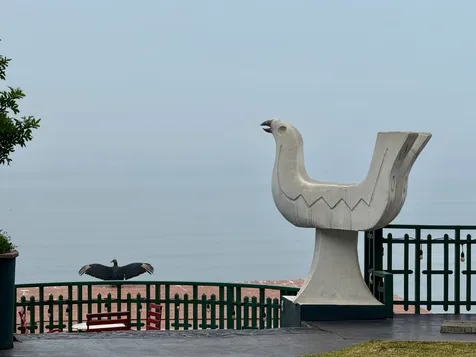
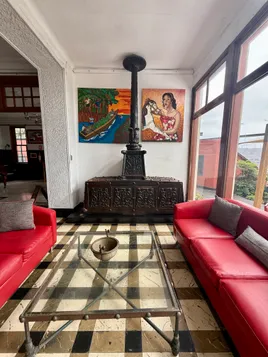
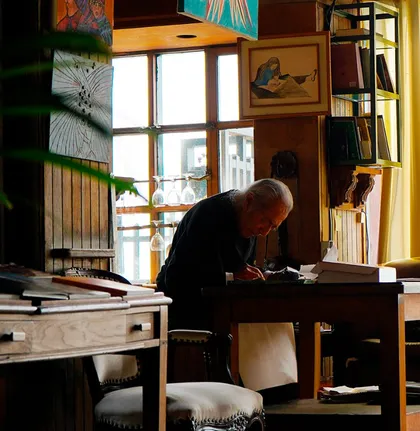
If you are lucky enough to read this while Víctor Delfín is still with us, and you are in Lima, I'd make the effort to meet him. We were only able to wave to him as we walked by his apartment on the way to the pool.
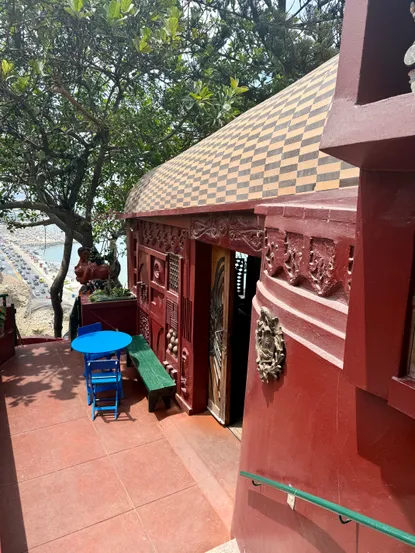
You can arrange an appointment to visit him at his studio. And I can't think of many travel experiences more interesting than sitting down with a 98-year-old artist in the house he has spent more than half a century transforming into his own world.
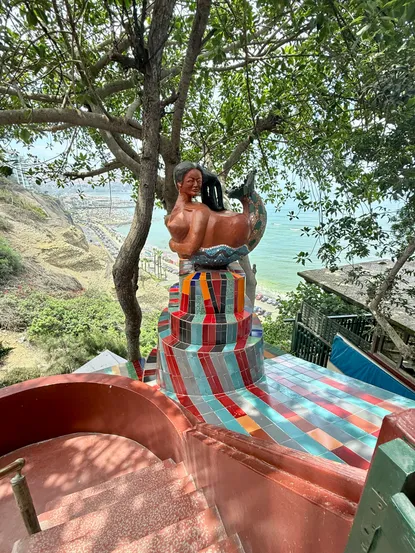
About Víctor Delfín
Delfín was born in 1927 in Lobitos, an oil town on Peru's northern coast. His father worked as a welder repairing the enormous drills used in the oil industry, and the young Delfín grew up around metal, machinery and the sea. It seems almost inevitable that those materials would eventually find their way into his art.
He entered Peru's National School of Fine Arts in 1945 and went on to have a career spanning more than seven decades. He has worked as a sculptor, painter, printmaker, designer and maker of applied arts, experimenting with everything from wood and ceramics to lead, aluminum, iron, concrete and salvaged industrial materials.
By the late 1960s, he was turning scrap metal gathered from Lima's used-machinery markets into animals and birds. His Bestiario and Signos del Zodiaco series were exhibited in 1968, and in the early 1970s he created Aves de América, a series of large metal birds that travelled throughout Latin America and to the United States.
He was also part of Arte Nuevo, a group of young Peruvian artists who challenged the established art world in the 1960s. His career has never been confined neatly to one medium or one idea of what an artist should be. He made furniture, lamps, gates and other objects as readily as paintings and sculpture.
His art is deeply connected to Peru: its animals, popular culture, mythology, landscape and history. And his life has been intertwined with the country's cultural and political life as well. During the 1990s, the Casa Taller became a meeting place for artists, students, activists and human-rights groups. Delfín also produced his Bestiario político, using animals and satire to comment on the political world around him.
Then there is El Beso.
In 1992 Delfín designed the enormous sculpture of two lovers embracing that became the centerpiece of Lima's Parque del Amor in Miraflores. Installed in 1993, it has since become one of the city's most recognizable public artworks.
Víctor Delfín- Second Home
https://www.secondhomeperu.com/
Jirón Domeyer 366, Barranco, Lima 15063, Peru.