The Things I Carry for a Tummy Ache When I Travel
Somewhere along the way, if you travel a lot, spend a lot of time away from home, and like to eat as much as I do, you are going to upset your stomach.
I have a tummy ache as I write this, which seems like the perfect time to talk about tummy aches when you travel. Somewhere along the way, if you travel a lot, spend a lot of time away from home, and like to eat as much as I do, you are going to upset your stomach.
Don't feel bad for me. I probably shouldn't have eaten seven different kinds of tacos The Coyoacán Market today. Even for me, it was a bit excessive, but I waited in line for an hour at the stall that my sister recommended and wanted to get my time's worth back in tacos.
I'm not a doctor, and this isn't medical advice. It's simply what I do when my stomach isn't happy on the road, shared from one traveler to another.
My preventative tummy care routine:
I take a lot of probiotics, and I am religious about it.
We use Microdyn to disinfect produce, following the directions on the bottle.
Wash your hands a lot and carry hand sanitizer. I carry a fancy one that smells so terrific I use it all the time instead of perfume.
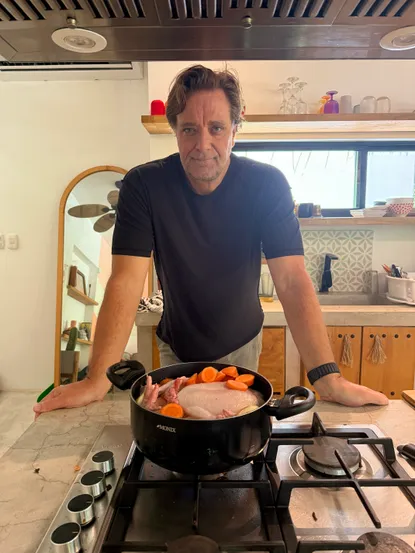
4 . If we're staying somewhere for more than a week, there's a very good chance Noah will make a pot of bone broth. Ideally made with a ton of chicken feet. Two-fer: good for the tummy and collagen building. It is, in my opinion, the elixir of life. And I try to have a cup a day.
There is something about having homemade broth in the fridge that makes me feel like we've actually settled in somewhere. The smells of it cooking, make wherever we are feel more like home.
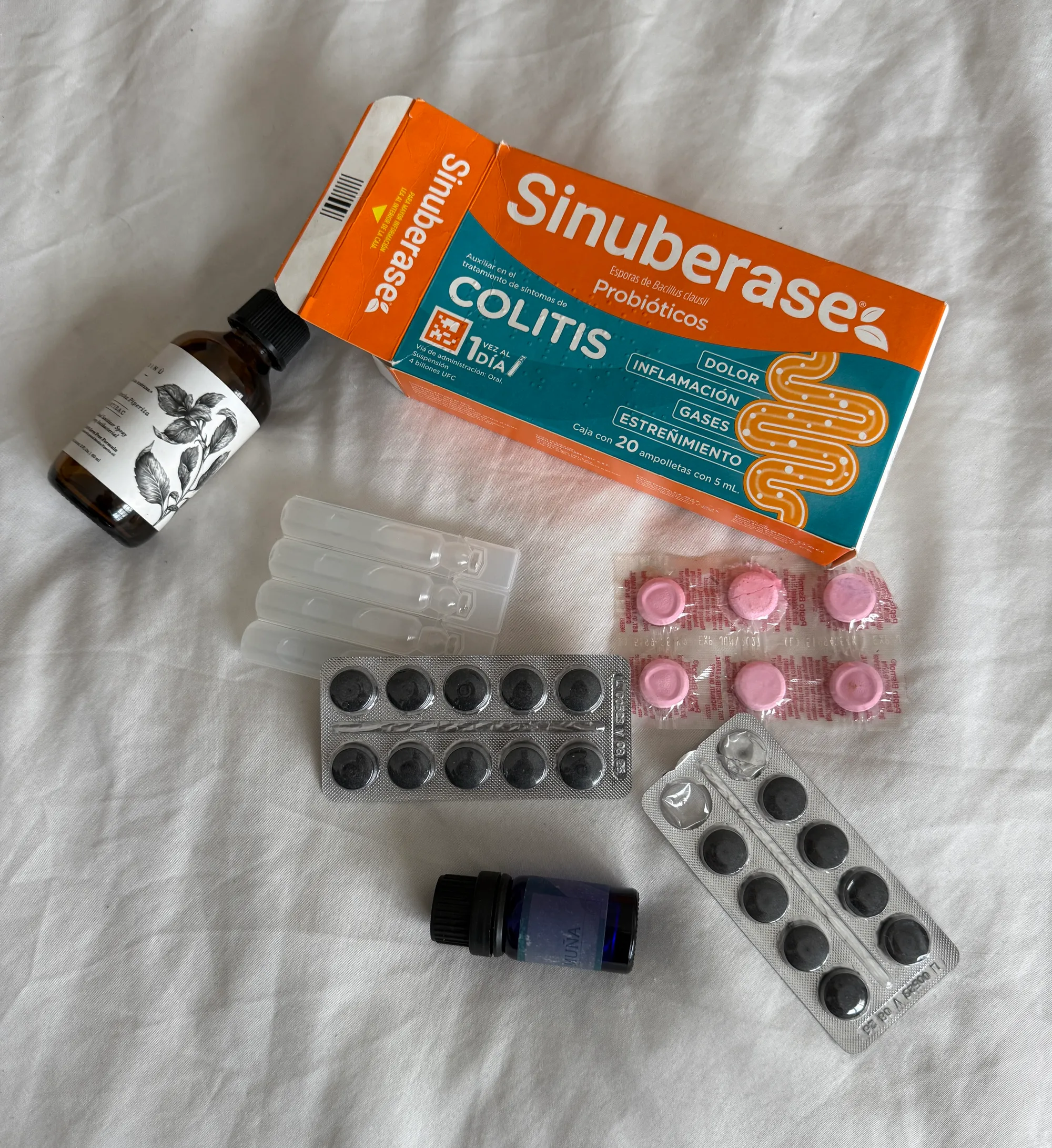
My tummy-ache travel kit, I always have on hand:
Charcoal tablets. These are my go-to when something I've eaten really doesn't agree with me. Sometimes you know pretty quickly that you've eaten something funky, and I personally take them early. Charcoal isn't a cure for food poisoning and it can interfere with some medications, so it's worth checking before taking it if you take regular medication.
Pepto-Bismol. Good for an upset stomach and diarrhea when you need some relief.
Antacids. Particularly useful for heartburn, indigestion and that horrible over-full feeling when you've simply eaten too much.
Electrolyte sachets. Especially important if you're losing fluids. I always have some tucked away in my luggage because they take up practically no room.
Probiotics. In Mexico, I particularly like Sinuberase, the liquid probiotic.
Mint tea, ginger or chamomile tea, although mint is definitely my favorite.
Mint essential oil. I always carry a little bottle. If I'm feeling queasy, I'll put a drop or two on a tissue and breathe it in. Maybe it's the mint, maybe it's the ritual, but I find the smell incredibly soothing. Ginger is another one people use for nausea, but peppermint is my go-to.
Sometimes you just need to stop eating This is probably the hardest one for me to admit. I love to eat, and eating is one of the reasons I travel in the first place. But when your body tells you to stop, listen.
Try not to fret if you're not feeling well, it's hard when you're not at home and traveling somewhere unfamiliar. But take a load off and sleep it off if you can. And keep washing your hands and bathroom surfaces; you may think it is bacterial, but it could be viral.
If you develop a fever, have severe symptoms, become dehydrated, or your tummy trouble persists, see a doctor. Don't be brave. Save that particular kind of bravery for getting back on the horse and trying that local cuisine again once you're feeling better.
One final word: I never eat warm-water oysters. As much as I love them, that is my own hard rule. Only cool water bi-valves for me. LIke the amazing ones, we have in New Zealand. See what I mean, tummy aches do indeed make you miss home.
Noah’s chicken soup
A Little Extra Love: Making the Consommé
Noah normally takes the extra step of turning his chicken soup into a beautiful, crystal-clear consommé. It takes a little more time, but it is truly an act of love. And I think your body knows it when it drinks it.
It is a little time-consuming. We have both made this for friends going through chemotherapy, and we believe it helped..
You absolutely do not have to do this extra step. Noah’s chicken soup is delicious just as it is. After step 10, just strain. Or if you can’t be bothered pre-roasting the meat and veg, just chuck everything in a pot and cook it up for 5 hours and ignore this recipe.
If you do bother to make the consommé (it is well worth it), you can freeze the consommé in ice cube trays, then pop the cubes into a freezer bag. That way, you have little portions of homemade goodness ready whenever someone needs a cup of something warm and comforting.
Ingredients:
1/2-3/4 Kilo Chicken wings, backs, scraps, chicken feet (can also make with beef/lamb)
2 chicken thighs
2 Onions, rough cut
4 Carrots, rough cut
3 stalks of celery, roughly cut
1 head of garlic cut in half
any other vegetable scraps
3 tablespoons of vinegar
½ cup white wine
8 egg whites
Salt
Milk powder (optional)
- Brine chicken (scraps and wings. Reserve thighs for later) in 3% salt solution (9 grams salt in 300ml water) for 45 minutes
- Rinse & dry thoroughly with paper towels
- Dust chicken with a thin coat of milk powder (optional)
- Roast chicken on a cookie sheet in 220 C oven
- Optionally, roast veggies on a separate tray (can use whatever leftovers are around…don't roast high water content veg like celery)
- Cook until well caramelized, turning the chicken over as needed
- Place chicken, veggies, vinegar, and wine into a large pot (along with any liquids in the baking tray and any aromatic herbs you like, including bay leaf, parsley, etc.) and cover with cold water to begin to make a stock
- Simmer on low heat for 5 hours, stirring occasionally. Skim and discard any frothy bubbles or scum that rise to the surface (esp at the start of heating)
- Let cool, then strain through a colander, and then again through a mesh sieve
- Place in the refrigerator to cool completely
- Put egg whites, rough-cut chicken thigh, and a rough-cut onion into a food processor and blend until well mixed and broken down
- Stir the egg/chicken mixture into the cold stock and mix well
- Place the pot on low heat and begin to heat. Your goal is to have the egg and chicken form a ‘raft’ at the top of the pot, which will filter the stock. As the mixture begins to heat, occasionally scrape the bottom of the pot very gently to release any of the mixture that has started to clump up on the bottom and allow it to float up
- Once the egg starts to visibly bind together, don't disturb or stir the mixture any further. Just let it continue to heat on low heat to a low simmer
- A raft should form at the top with liquid bubbling through, forming mini volcanoes
- Cook for 30 minutes or until the liquid is completely clear. Remove from heat
- Place a cheesecloth over a strainer. Using a ladle, gently push down the raft and skim off the clear liquid and pour it through the strainer. Repeat until as much of the clarified liquid as possible is removed.
- Season the consommé with salt and adjust acidity with vinegar if necessary.
- Reheat before serving (check seasoning a final time when hot)