Tuna Breakdown: Inside Mexico City’s Baja Bluefin Ritual
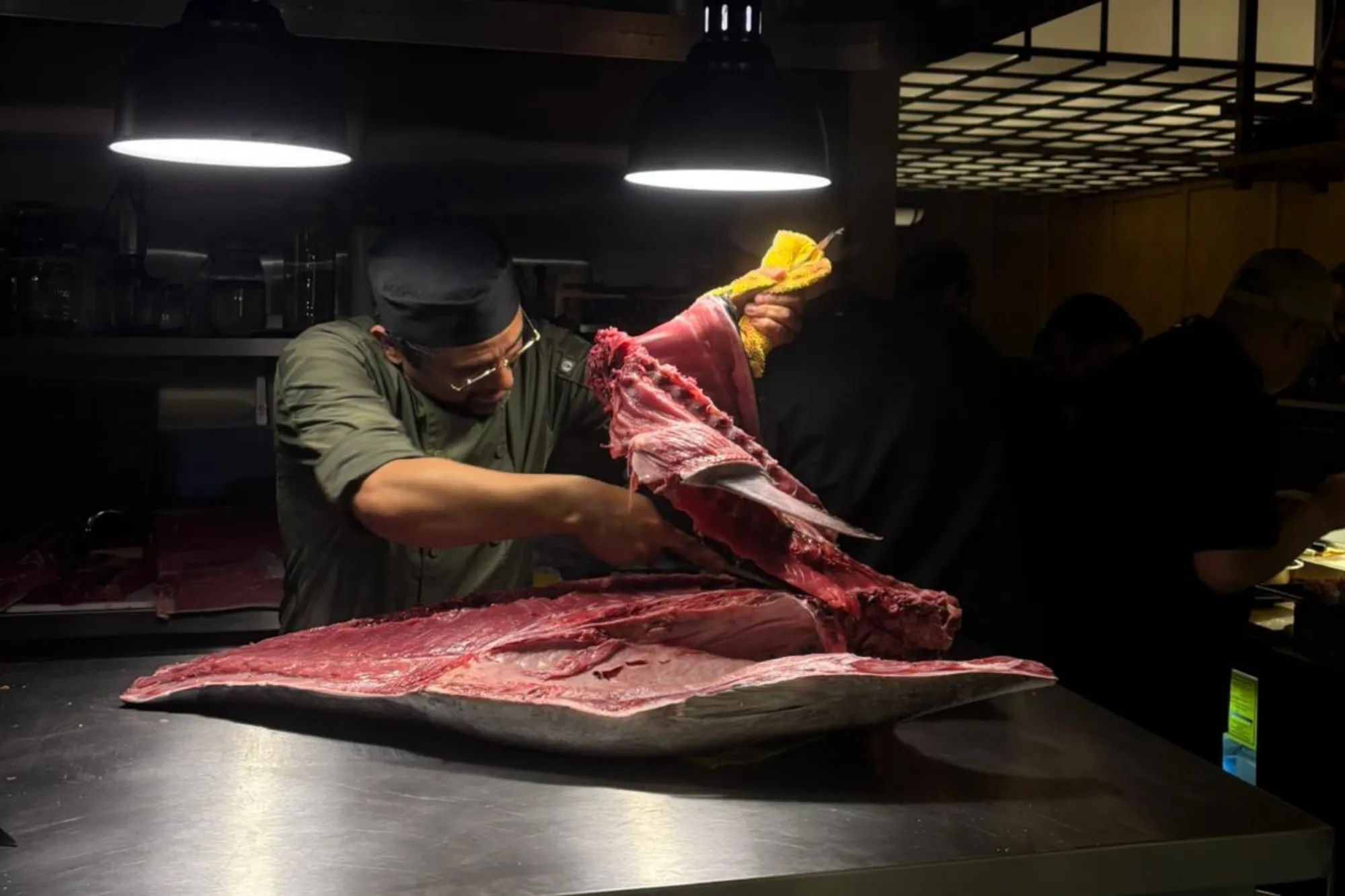
A whole bluefin tuna had been brought out and laid across the stainless-steel counter. The chef began with the head.
We stumbled into Koyi by accident.
There were seven of us, no reservation, and none of us had any idea that we were about to watch a tuna being taken apart.
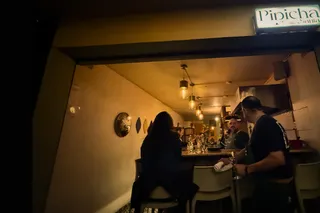
Koyi is a tiny sushi restaurant in San Miguel Chapultepec, with a bar inside and just two tables on a covered street patio. We managed to squeeze in, five of us at a table and two of my kids at the bar.
Which turned out to be the perfect arrangement as we had accidentally stumbled into a Ronqueo de atún, a traditional Japanese-style breakdown of a whole tuna, with the different parts of the fish becoming different courses.
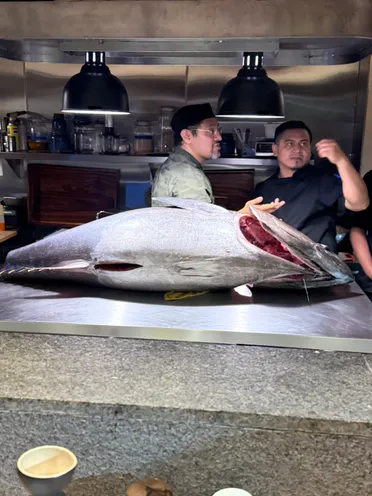
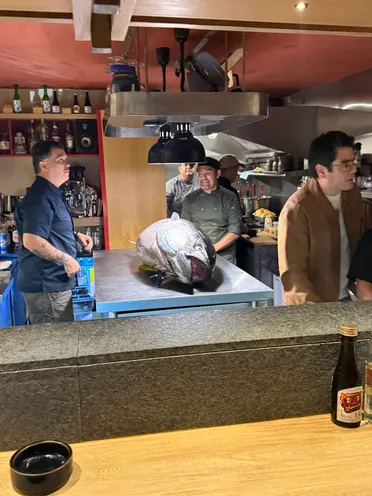
I kept running between our table and the bar, where my kids had a front-row seat. A whole bluefin tuna had been brought out and laid across the stainless-steel counter. The chef began with the head.
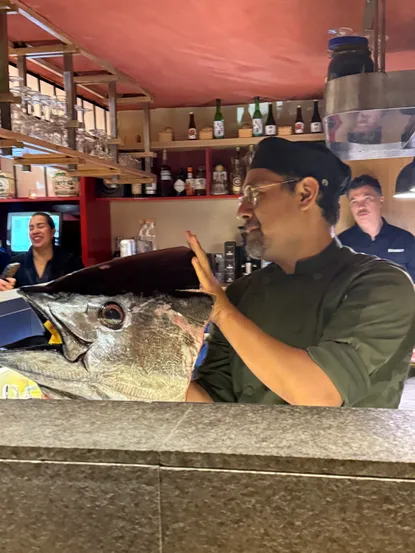
The knife went in with startling precision. Pieces were separated from the body, held up and shown to the people gathered around the bar.
It was dramatic, strangely ceremonial, and incredibly mesmerising to watch a whole fish become a series of distinct pieces, each with its own name, texture, and purpose.
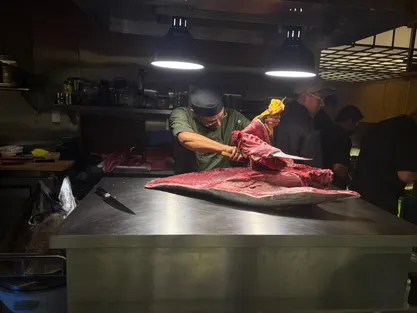
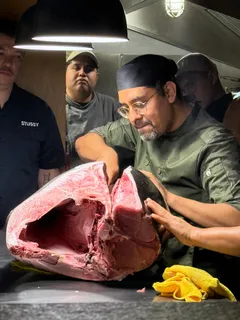
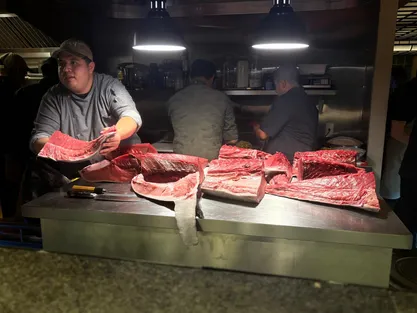
As the fish was taken apart, its different sections became different courses. Akami. Chutoro. Otoro. The tuna changed character from one course to the next, moving from clean, intensely flavored red meat to increasingly rich, silky pieces of belly that melted on the tongue.
The quality of the tuna was off the charts.
I have eaten a lot of memorable meals, but there was something almost ridiculously good about this fish. It was the kind of food that makes everyone at the table stop talking for a moment and make happy grunting noises instead.
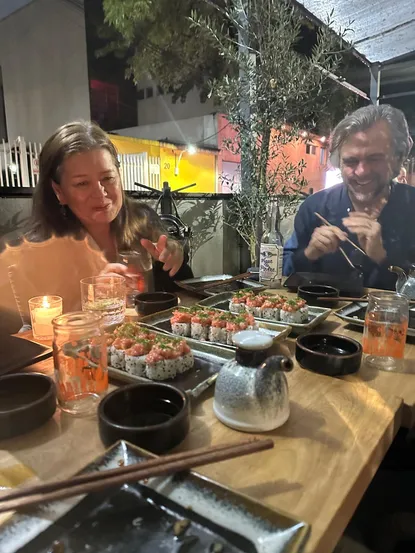
We started with nigiri: akami, the lean deep-red flesh; chutoro, marbled with more fat; and otoro, the luxurious belly, almost buttery in texture. There was tuna tartare folded into uramaki, a handroll with wagyu and otoro, and an almost decadent brioche topped with otoro and ikura. Then came tostadas layered with akami and chutoro, the richness of the tuna set against the crisp tostada and soy-thai dressing. The menu perfectly demonstrated just how many personalities one tuna could have.
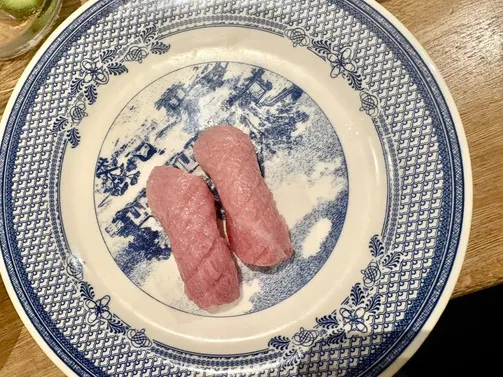
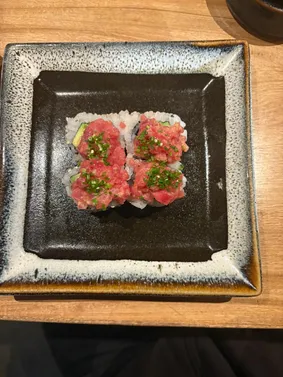
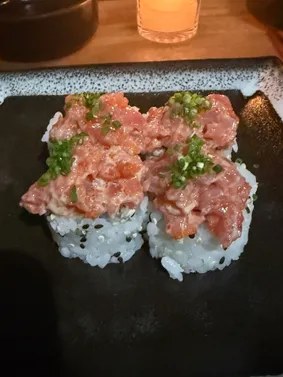
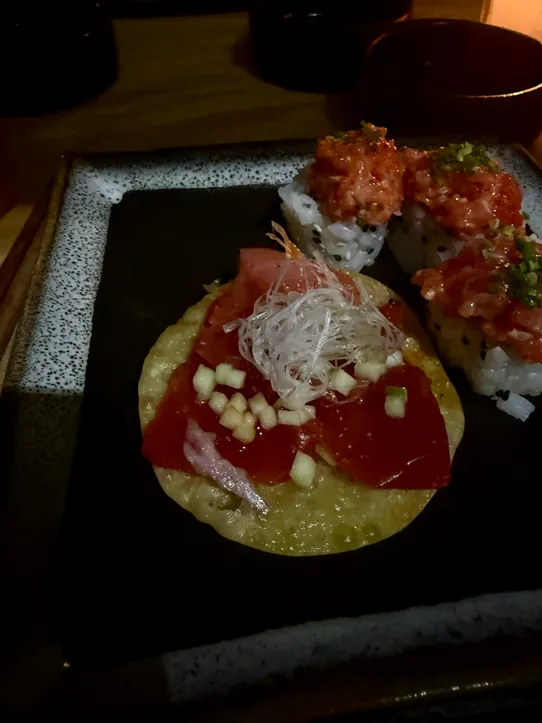
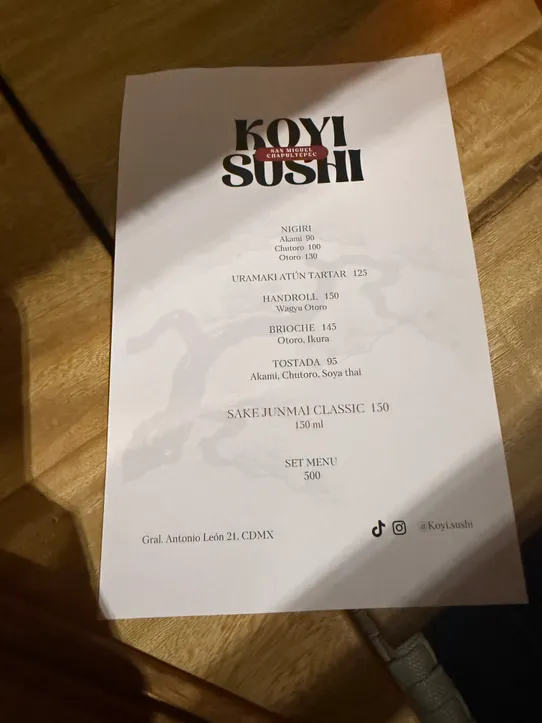
I wanted to know where this extraordinary delicious fish had come from, so I asked the waiter.
Baja, he told me. It was a special bluefin, raised on a diet of sardines in giant offshore ocean pens. But the tuna itself had begun life as a baby in Japan.
So I went home and did a deep dive into Baja fish.
Baja Tuna Story
What I discovered was that the tuna's journey is quite extraordinary. Pacific bluefin tuna are born in the waters around Japan. As they grow, some of these young tuna swim east across the Pacific, eventually reaching the waters off Baja California. They can spend several years in the eastern Pacific, feeding and growing.
Once they reach Baja, some of these young wild tuna are caught and transferred into enormous floating pens in the ocean. They are kept there and fattened for several months, feeding on large quantities of sardines and other small fish. The pens can be enormous, circular structures stretching around 60 metres across and 50 metres deep. The tuna aren't raised from babies in these pens. They arrive as wild fish from the open ocean, and the pens give them a chance to grow bigger and fattier before they are harvested. You can see the Baja bluefin pens here.
The relationship between Baja and Japan goes back much further than the modern tuna ranches.
Japanese fishermen were working along the Baja coast as early as the beginning of the twentieth century. In the 1920s, a Japanese fisherman and businessman named Masaharu Kondo brought Japanese tuna fishermen to Bahía Tortugas, where they began fishing for tuna, albacore, and bonito. Kondo went on to establish a tuna packing plant, employing Mexican workers and helping develop the local fishing industry.
The Japanese influence wasn't just about fishing. Japanese knowledge of handling and processing seafood became part of Baja's fishing culture, and Japanese techniques are still associated with the bluefin industry today, including ikejime, the precise Japanese method of dispatching a fish, and ronqueo, the elaborate breakdown of a whole tuna.
The Baja floating pens started in 1994, when Mexico granted the first commercial concession to fatten bluefin tuna in floating pens near Isla de Cedros. The industry quickly became closely tied to Japan, its biggest and most important market for high-quality sashimi tuna.
And I wonder if that connection has also helped fuel Mexico's growing appetite for Japanese food. I am constantly surprised by how many Japanese restaurants there are in Mexico City, and by how much sashimi appears on menus here in San Miguel de Allende.
Want to See a Tuna Breakdown?
If you want to experience a ronqueo de atún yourself, keep an eye on the Japanese restaurants and groups in Mexico City that put them on as special events.
Koyi, where I watched my tuna being broken down, is one to watch. Onomura regularly holds ronqueos at its different locations, including Prado Norte, Roma, Parque Hundido, Santa Fe, Interlomas, Bosques and Satélite. Their current ronqueo includes a whole tuna caught in Ensenada and flown to Mexico City the same morning. Ryoshi Masaryk also offers a live tuna ronqueo, with the fish broken down in front of guests.
I even went to a Norwegian salmon breakdown once, which was fascinating in its own way. But tuna is my favourite.
About Koyi
Koyi is the creation of restaurateur Diego Patrón and chef David Portillo, whose Japanese cooking background includes time at Tori Tori, Rokai and Makoto. Before Koyi, the pair were behind Wabi Sushi in Roma, which I also visited and loved. Wabi is still at Orizaba 76 in Roma Norte, while Koyi's Roma location is at Cozumel 94.
Koyi Roma
Cozumel 94, Roma Norte, CDMX 06700
Wabi Sushi
Orizaba 76, Roma Norte, CDMX 06700
Koyi's San Miguel Chapultepec location, where I watched the tuna breakdown, was at General Antonio León 21. It is currently showing as temporarily closed as of September 2026, so I would not send readers there without checking first. Koyi Roma is currently listed as operating.