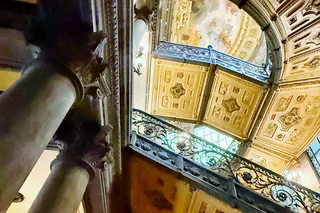
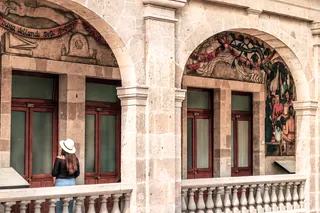
7 Hours in Centro Histórico
It wasn't meant to be a rigorous itinerary. More, let's see how much we can fit in sort of day. It turned into a wonderful seven hours.
We decided to spend a day wandering around Centro Histórico, with input, and thankfully a few deviations from our AI overlords.
Noah and I asked our respective AIs what we should see and do. Naturally, Claude and Chatty came back with different recommendations. We compared notes, picked the things that appealed to us, added a few of our own, and set off.
It wasn't meant to be a rigorous itinerary. More, let's see how much we can fit in sort of day.
It turned into a wonderful seven hours.
Templo Mayor
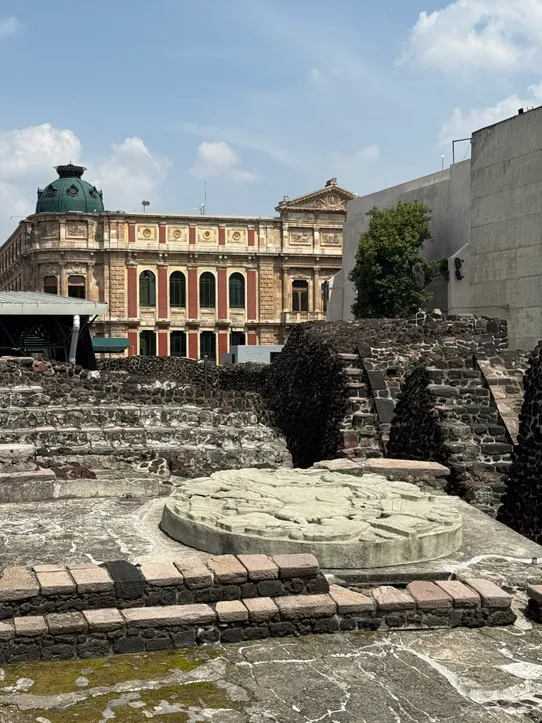
We started at Templo Mayor, and I think this is an important place to begin if you want to understand Mexico City.
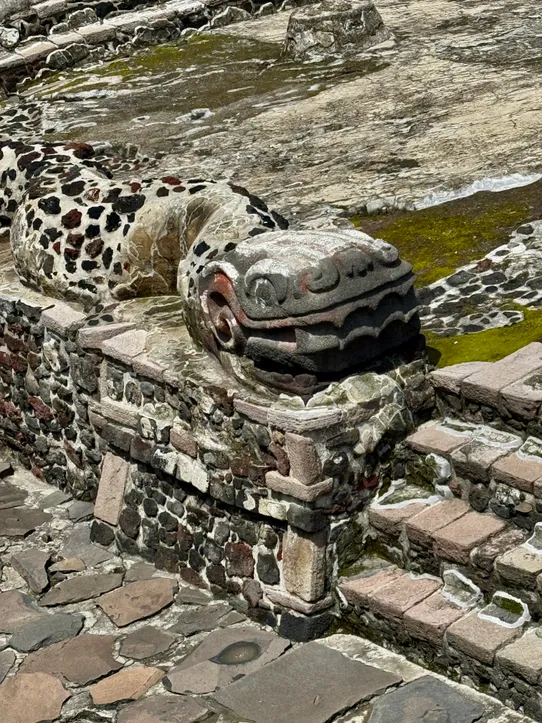
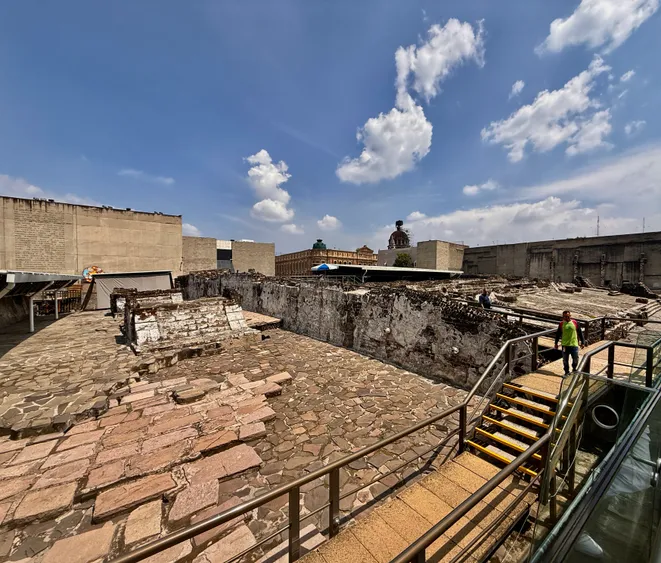
Right in the middle of the modern city, behind the Metropolitan Cathedral, are the remains of the enormous Mexica temple complex that once stood at the heart of Tenochtitlan.
What I found so extraordinary is that Mexico City was literally built on top of another city.
After the Spanish conquest, much of Tenochtitlan was dismantled, with stones reused to build the new colonial city. The great ceremonial center disappeared beneath the growing city, and for centuries the remains were essentially buried in plain sight.
Then, in 1978, workers discovered the enormous stone disk of Coyolxauhqui, the Mexica moon goddess. That discovery led to the excavation of Templo Mayor and the uncovering of an extraordinary amount of what had been buried beneath modern Mexico City.
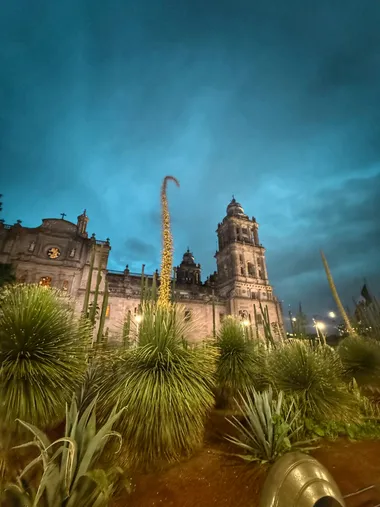
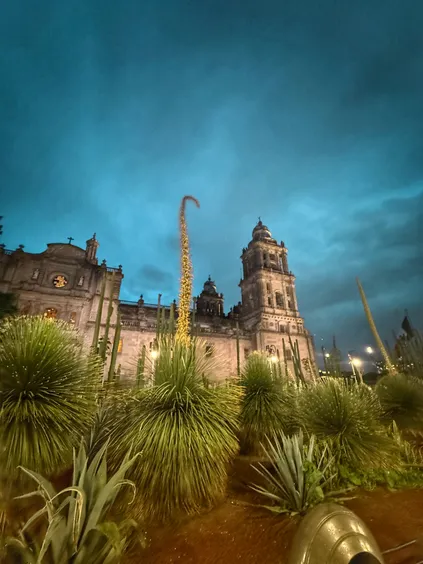
Standing there, with the ruins on one side and the Cathedral looming behind them, really drives home what this city was built upon.
Don't skip this one. Even if you aren't particularly interested in archaeology, it gives you a completely different understanding of Mexico City.
From the ruins, it is also worth walking over to the Zócalo, the enormous main square that sits right in the middle of the historic center. It is the historic heart of Mexico City and stands over what was once the ceremonial center of Tenochtitlan. You can also see the Metropolitan Cathedral.
Museo Textil de los Pueblos Indígenas y Afromexicanos
The textile museum was our first deviation from the original plan.
It's right across from Templo Mayor, so we spotted it and decided to pop in.
I'm a sucker for textiles, so this was an easy sell for me.
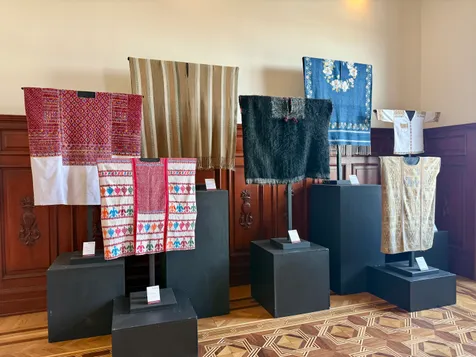
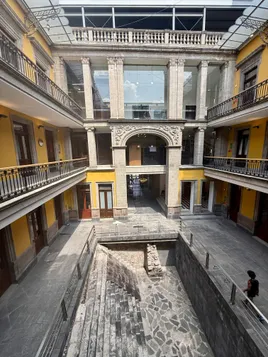
The Museo Textil de los Pueblos Indígenas y Afromexicanos, or MUT, is brand new, having opened in June 2026. It is housed in the historic Casa del Marqués del Apartado, a beautiful neoclassical building by Manuel Tolsá. The permanent exhibition is arranged across 12 galleries, exploring indigenous and Afro-Mexican textile traditions, techniques, fibers, dyes and knowledge passed down through generations.
It is a peaceful place, particularly after the bustle outside.
Was it earth-shattering? No. But it was interesting, beautifully housed and a very pleasant way to spend some time. And, of course, I always have ideas about what I'd add to an exhibition, because apparently I can't just look at a museum without mentally curating it.
The building is lovely and you can see inside the courtyard excavations of the ruins.
Pastelería Ideal
Chatty (ChatGPT) told me that Pastelería Ideal was the oldest pastry shop in Mexico City, which was the reason I wanted to go. In my head, I was picturing a gorgeous old bakery that had been operating for several hundred years.
Well, go figure, the AI was wrong.
Pastelería Ideal was founded in 1927, so while it is nearly a century old and genuinely historic, it is definitely not the oldest bakery in Mexico City. Another search later corrected it. The oldest is La Vasconia, founded in 1870. So make sure you double-check any AI-assisted facts.
Anyway, we made the most of it and got to tasting and sampling.
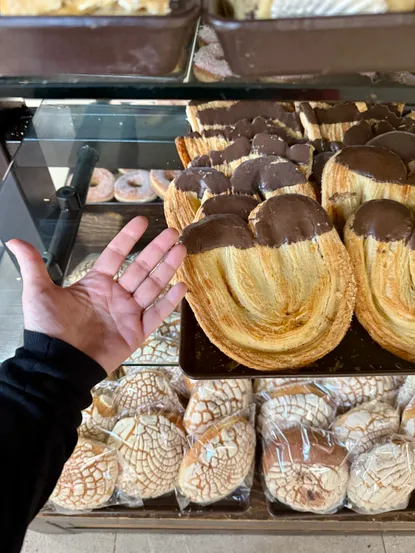
The pastries are enormous, wonderfully over-the-top and look as though they flew straight out of the 1970s and never found their way home.
This is bang for your buck territory, not pastry refinement.
Think big, airy, spongey pastries, enormous cakes, cookies, breads and sweets, all displayed in quantities that make choosing just one thing seem almost impossible.
Rows and rows of baking, with absolutely no attempt to be minimalist.
Mercado Abelardo L. Rodríguez
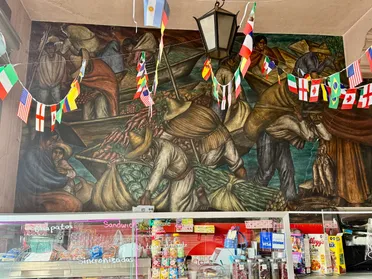
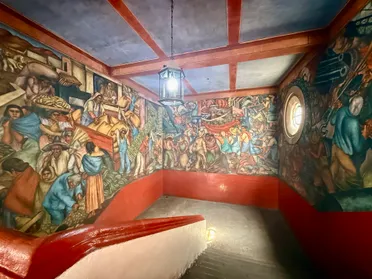
We then went looking for something that can be surprisingly easy to miss: the murals inside Mercado Abelardo L. Rodríguez.
The murals are inside a working market, which is part of what makes them so interesting.
The market opened in 1934 as an ambitious model for public markets, and its huge interior was decorated with murals created by artists working under the direction of Diego Rivera. The murals address work, agriculture, industry, social conditions and everyday Mexican life.
And here's my tip: go upstairs.
Some of the murals are tucked into the stairwells and upper levels, where you might not think to look. I've had friends tell me they went to the market and completely missed them.
Don't make that mistake.
I loved that we were looking at important Mexican mural work while people around us were simply doing their shopping.
The juxtaposition is very CDMX.
Secretaría de Educación Pública
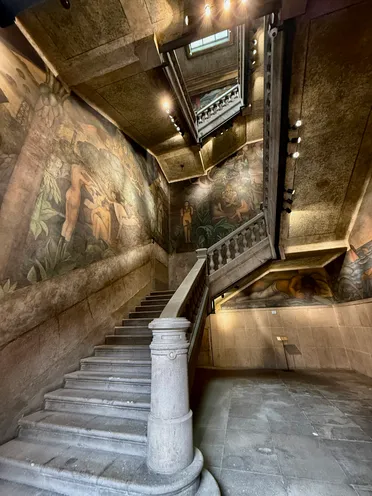
And then came my absolute favorite stop: the Diego Rivera murals at the Secretaría de Educación Pública.
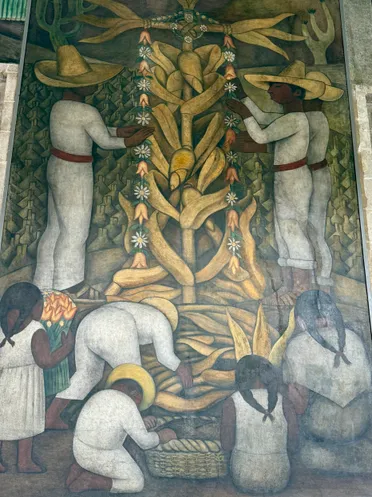
Rivera painted here between 1923 and 1928, covering the walls and stairways of the building with murals depicting work, festivals, politics and everyday Mexican life. The murals are spread through two courtyards and across three levels.
I had expected a few murals. I was completely wrong. There are 235 panels.
They are everywhere: corridors, walls, stairways and courtyards. You keep turning a corner and finding another one.
The whole place affected me much more than I expected. There was something about seeing Rivera's work surrounding you, rather than standing in front of one famous painting in a museum, that made it feel incredibly immediate.
I have written a whole separate dispatch about the SEP murals because they moved me so deeply. Read more: https://laurenlulutaylor.com/dispatch/diego-rivera-murals-worth-finding-a-remarkable-stop-in-centro-hist-rico/
If you go, give yourself time.
Palacio Postal
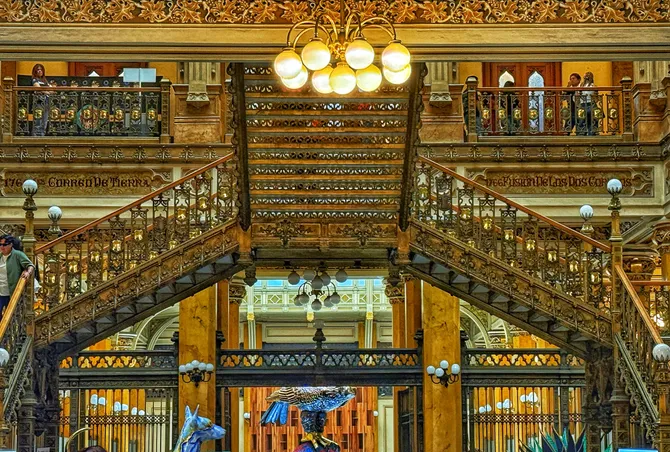
From there we walked to the Palacio Postal, or Post Office, specifically to see the famous staircase.
This was a quick stop, but well worth it.
It is still a working post office, which somehow makes the whole thing even better. Designed by Italian architect Adamo Boari and Mexican engineer Gonzalo Garita, it opened in 1907 and is an exuberant mix of marble, bronze, elaborate metalwork and decorative details.
We went in, admired the staircase, looked around and carried on.
Museo Nacional de Arte
Conveniently, MUNAL is right across the street.
We went for the art, but, as so often happens in Mexico City, the building itself was almost as much of a reason to visit.
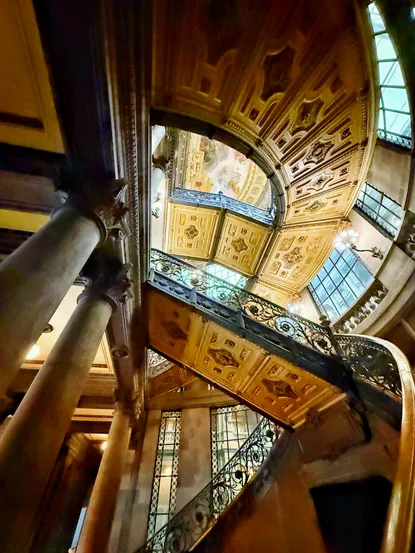
And talk about beautiful staircases. This one is a stunner.
The Museo Nacional de Arte occupies the former Palacio de Comunicaciones, an extraordinary early-20th-century building, and walking through the grand entrance into that interior is almost enough reason to go.
Of course, there is also the collection, which covers Mexican art from the late pre-Hispanic period through the first half of the 20th century.
But I'll admit it: I was very distracted by the architecture. I've also written a whole dispatch about the building and its art.
Read more about MUNAL: https://laurenlulutaylor.com/dispatch/museo-nacional-de-arte-mexico-city-a-stairway-not-to-miss/
Sears and Bellas Artes
Then we crossed over to Sears.
Yes, Sears.
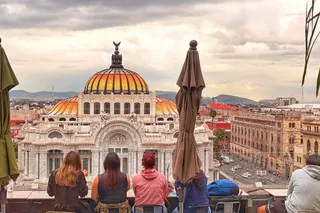
One of our slightly ridiculous AI-recommended detours was to go upstairs and look back at Palacio de Bellas Artes, but in this case it was worth it.
Seeing Bellas Artes from above gives you a completely different appreciation of the building and its architecture.
Of course, you can go inside Bellas Artes itself, and you absolutely should if you have the time. It is one of Mexico City's great cultural landmarks, with its Beaux-Arts exterior, Art Deco interiors and murals by some of Mexico's most important artists.
We were on a seven-hour mission, so we admired it from the other side and kept moving.
Read more: https://laurenlulutaylor.com/tables/grab-a-table-or-rather-a-stool-above-bellas-artes/
Casa de los Azulejos
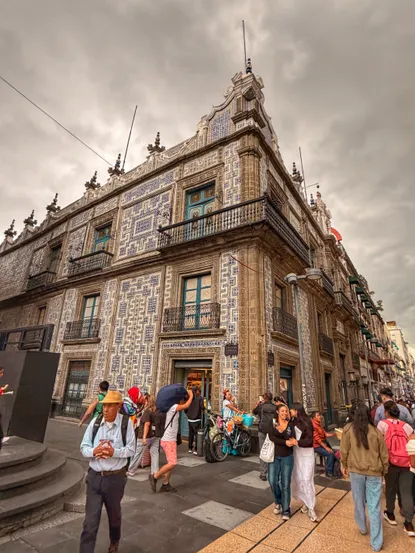
Next we walked past the Casa de los Azulejos, the famous blue-and-white tiled building.
It is one of those places where you can be walking along quite happily and suddenly stop because, really, look at it.
The 18th-century building was once the residence of the Counts of the Valle de Orizaba. Its distinctive blue-and-white Puebla Talavera tiles are what make it instantly recognizable.
And you can go inside.
The building is now home to Sanborns, the Mexican restaurant, department store and pharmacy chain, so you don't have to settle for admiring the facade from the street.
Gran Hotel Ciudad de México
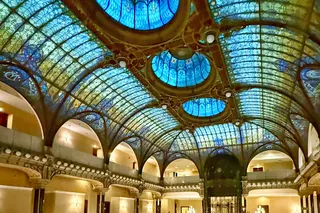
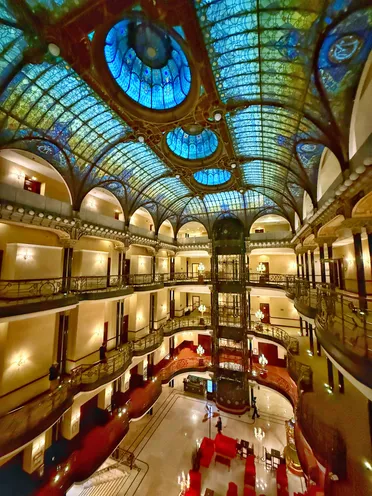
Our final stop was the Gran Hotel Ciudad de México, which I would rank as essential to see.
We went inside to see the spectacular stained-glass ceiling and then headed upstairs to the balcony for a sunset drink and a view over the Zócalo. Read more about the Grand Hotel:
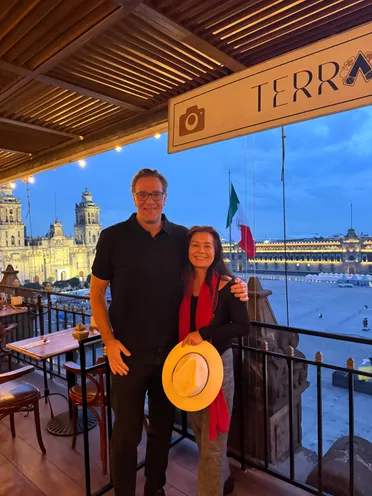
After seven hours of walking, looking, climbing stairs and taking in an almost absurd amount of history, sitting down with a drink and looking out over the Zócalo seemed like a pretty perfect way to finish.
You can spend seven hours wandering around Centro Histórico and still feel as though you've barely scratched the surface.
Some other stops you might want to consider:
- Metropolitan Cathedral – We saw it from Templo Mayor, but didn't go inside. It's enormous and sits directly over the former Mexica sacred precinct.
- Palacio Nacional – Another big one for Diego Rivera fans, with his famous murals depicting the history of Mexico.
- Museo Mural Diego Rivera – A separate museum from the SEP murals, and home to Rivera's enormous Dream of a Sunday Afternoon in Alameda Central.
- Museo Franz Mayer – For decorative arts, design and objects rather than another collection of paintings.
- Museo del Estanquillo – Carlos Monsiváis's collection of Mexican art, photographs, objects and popular culture. This one sounds particularly interesting to me.
- Museo del Perfume (MUPE) – We actually walked right past it and didn't have time to go in.
- Museo del Chocolate (MUCHO) – Another one we passed. Obviously, I need to go back.
- Mercado de La Merced – For a completely different side of Centro, and particularly if food and markets are your thing.
- La Lagunilla – The flea and antique market for vintage furniture, objects, photographs and Mexican ephemera.