The Unexpected Pleasures of Cantón Mexicali: Chinese-Mexican Cooking in Roma Norte, Mexico City
The restaurant's culinary direction takes inspiration from the Chinese-Mexican traditions of Mexicali, bringing a contemporary Mexico City sensibility to a much older food culture.
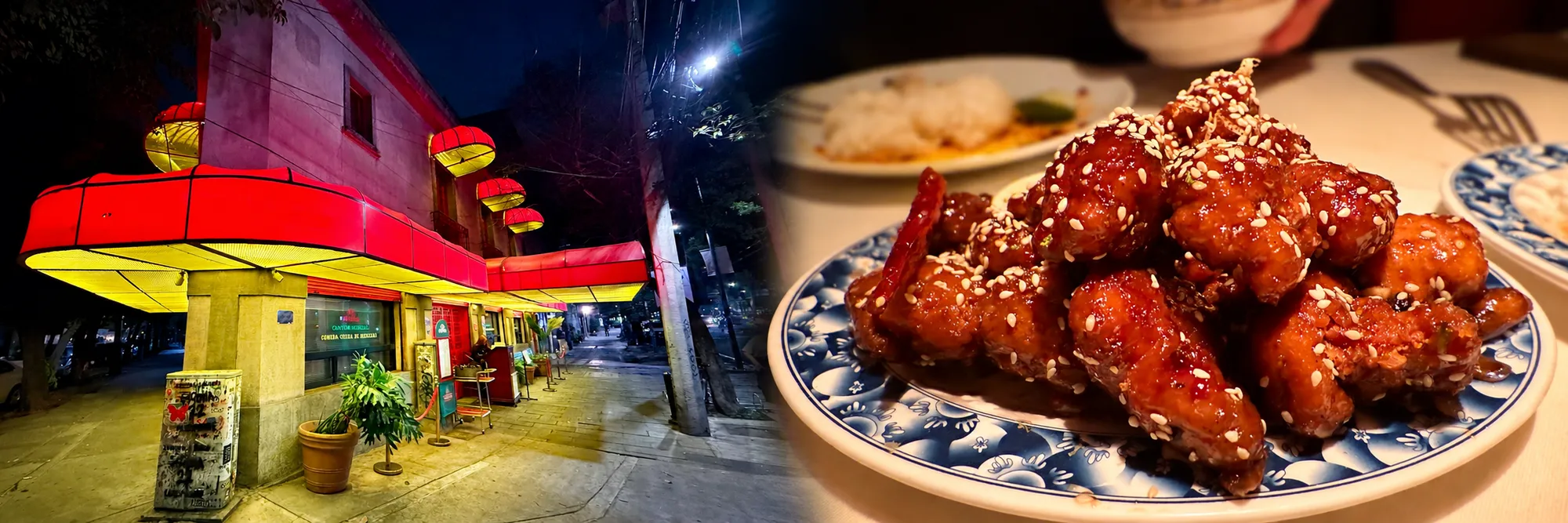
We'd walked past Cantón Mexicali countless times. It's in our neighbourhood, on the corner, and we'd noticed it. Not just the restaurant itself, with its rather theatrical red velvet ropes, green fluorescent lighting, and kitschy appearance, but also some pretty fetching aromas.
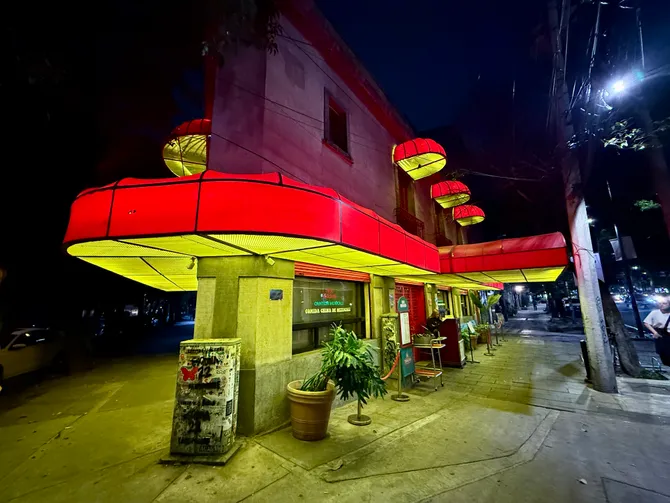
We'd often wondered what was coming out of that kitchen, but somehow never quite imagined ourselves going in. It looked a little odd, a little too over-the-top.
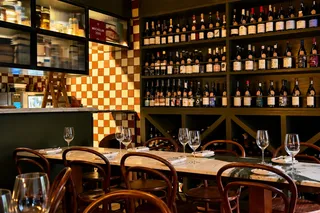
Then one evening, after a rather lovely candlelit wine bar, we found ourselves looking for somewhere to continue the romance. The places we'd had in mind were either fully booked or quoting a three-hour wait. So we walked towards home.
And there it was again. That smell. Szechuan, garlic. Something unmistakable and rather appealing.
We debated. Not particularly romantic-looking. But the smells won.
We went in, and what followed turned out to be one of those happy, unexpected discoveries.
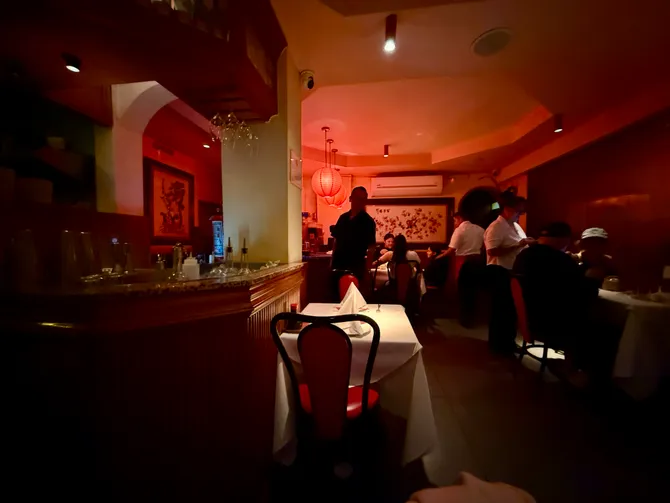
First of all, we took it as a rather good sign that, as soon as we were seated, we found ourselves surrounded mostly by Mexican diners, rather than tourists and expats, as can so often be the case in the more gringo-filled restaurants of Condesa and Roma Norte.
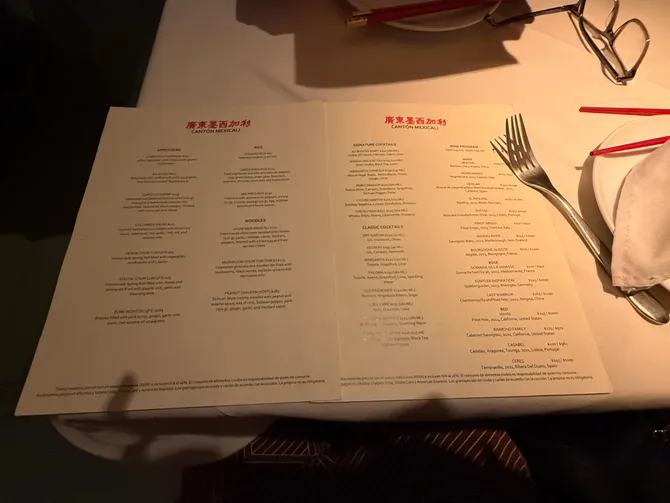
The first thing we ordered was the Special Chun Cun, a homemade spring roll filled with cheese and shrimp, stir-fried with guajillo chilli, garlic and Shaoxing wine.
Now, there's an interesting combination. Guajillo, a distinctly Mexican dried chilli, alongside Shaoxing, a traditional Chinese cooking wine. Cheese and shrimp tucked into it.
It immediately hit the spot.
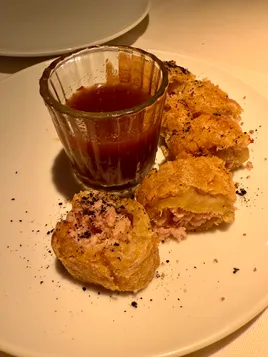
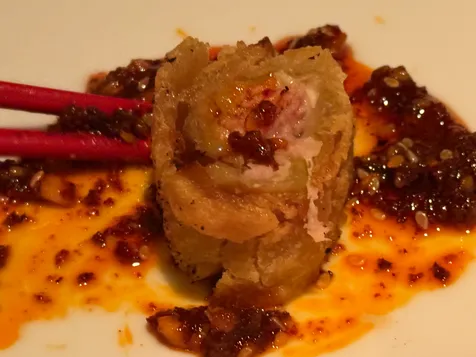
God, sometimes nothing is more romantic than good old-fashioned comfort food. And the food in this joint was about as comforting as it gets.
A little Chinese, a little Mexican, and a story of migration
To understand Cantón Mexicali, it helps to travel a little further north, to Mexicali itself, the capital of Baja California, on Mexico's border with the United States.
Where the Chinese-Mexican story got started
Chinese migration into northern Mexico gathered pace in the late nineteenth and early twentieth centuries. Many of those arriving came from Guangdong, in southern China, particularly the Cantonese-speaking communities. They came in search of work and opportunity, drawn by the development of railways, mining and, eventually, the agricultural possibilities of the Mexicali Valley.
The development of this desert region depended heavily on immigrant labour. Chinese workers helped build irrigation canals, cultivate the land and establish businesses in what was becoming a rapidly developing border city.
By the 1910s and 1920s, Mexicali had a substantial Chinese population. At its centre grew La Chinesca, a lively commercial district of Chinese shops, restaurants, hotels, cafés and meeting places. It became the heart of Chinese community life, and one of the most distinctive Chinese settlements in Mexico.
But this history had its darker chapters. Chinese communities across northern Mexico faced growing hostility, discrimination and anti-Chinese campaigns. In Baja California, the 1937 land reforms and expulsions forced many Chinese agriculturalists from the Mexicali Valley, while others moved into the city or sought opportunities elsewhere. Despite this backlash, the Chinese community endured, and its influence became woven into the fabric of Mexicali.
Thankfully, food was one of the things that endured.
The cooking brought by Chinese migrants, rooted largely in Cantonese traditions, gradually adapted to the ingredients, tastes and eating habits of Mexico. Local produce, Mexican chillies, beef and other regional ingredients found their way into Chinese dishes. Recipes evolved, techniques were adapted, and dishes emerged that belonged to this particular corner of Mexico.
Over generations, Mexicali developed a distinctive Chinese-Mexican food culture. It wasn't simply Chinese food transplanted to Mexico, nor was it conventional Mexican cooking. It was the result of two cultures living alongside one another, sharing ingredients, traditions and, eventually, tables.
An old Chinese restaurant, a new chapter
Which brings us back to our little discovery in Roma Norte.
Despite its name, Cantón Mexicali isn't an old institution transplanted from the border. It's a relatively recent Mexico City restaurant, but one with a rather lovely connection to the city's own Chinese restaurant history.
The restaurant occupies a two-storey corner building on Avenida Álvaro Obregón, a property that had been home to a Chinese restaurant for decades. Before Cantón Mexicali arrived, it was run by an immigrant Chinese couple. When they eventually transferred the premises to the new owners, they made one request: that the character of the place be preserved.
And thankfully, it was.
The old paintings remain on the walls, along with Chinese paper lanterns, the Tsingtao beer sign and those wonderfully old-fashioned Formica tables, dressed in white tablecloths and surrounded by red upholstered chairs. There's something wonderfully nostalgic about it. It reminded me of the Chinese restaurants I used to visit with my family in New York City in the 1980s.
The restaurant's culinary direction takes inspiration from the Chinese-Mexican traditions of Mexicali, bringing a contemporary Mexico City sensibility to a much older food culture.
The food: come hungry, and bring friends
I only wish we'd been a bigger group so we could have ordered more. There was so much on the menu that sounded tempting, and two people can only manage so much, particularly when you are carrying on from a wine bar where you already had nibbles.
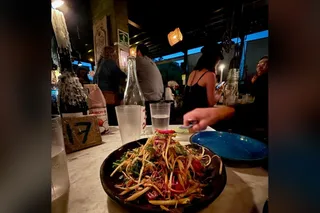
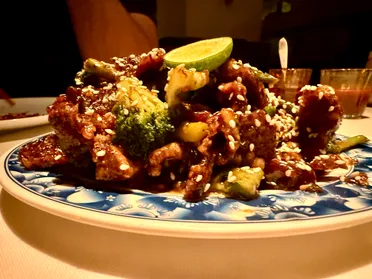
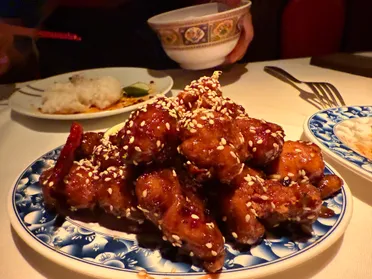
We settled on General Chicken and Mexicali Beef, alongside our earlier Special Chun Cun. The beef was so good, extra crispy and full of flavor. The chefs are, without question, fry masters.
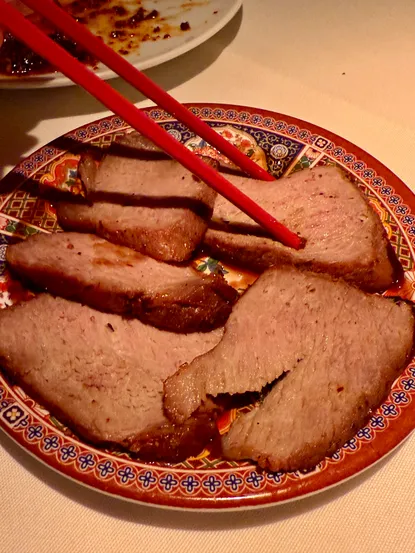
We also ordered the Carnitas Coloradas, 48-hour-marinated pork, slowly glazed in the oven. Another dish that disappeared quickly. Everything was excellent.
A word of advice: order extra rice. The food is old-school delicious—but it is also something of a salt bomb. You might wake up with sausage fingers like I did but well worth it. Order plenty of rice to balance things out and mop up those delicious sauces.
Website: https://www.cantonmexicali.com/
Address: Av. Álvaro Obregón 264, Hipódromo, Cuauhtémoc, 06100 Ciudad de México, CDMX, Mexico
Phone: +52 55 1701 1479
Hours: Open · Closes 1 am
Menu: drive.google.com
Reservations: opentable.com.mx
Also worth knowing: Cantón Mexicali has a second Mexico City location in Zona Rosa, at Florencia 22, Colonia Juárez, Cuauhtémoc, Mexico City, 06600. We visited the original corner location on Avenida Álvaro Obregón in Roma Norte.