Mexico City After Dark: The Color and Choreographed Chaos of Lucha Libre
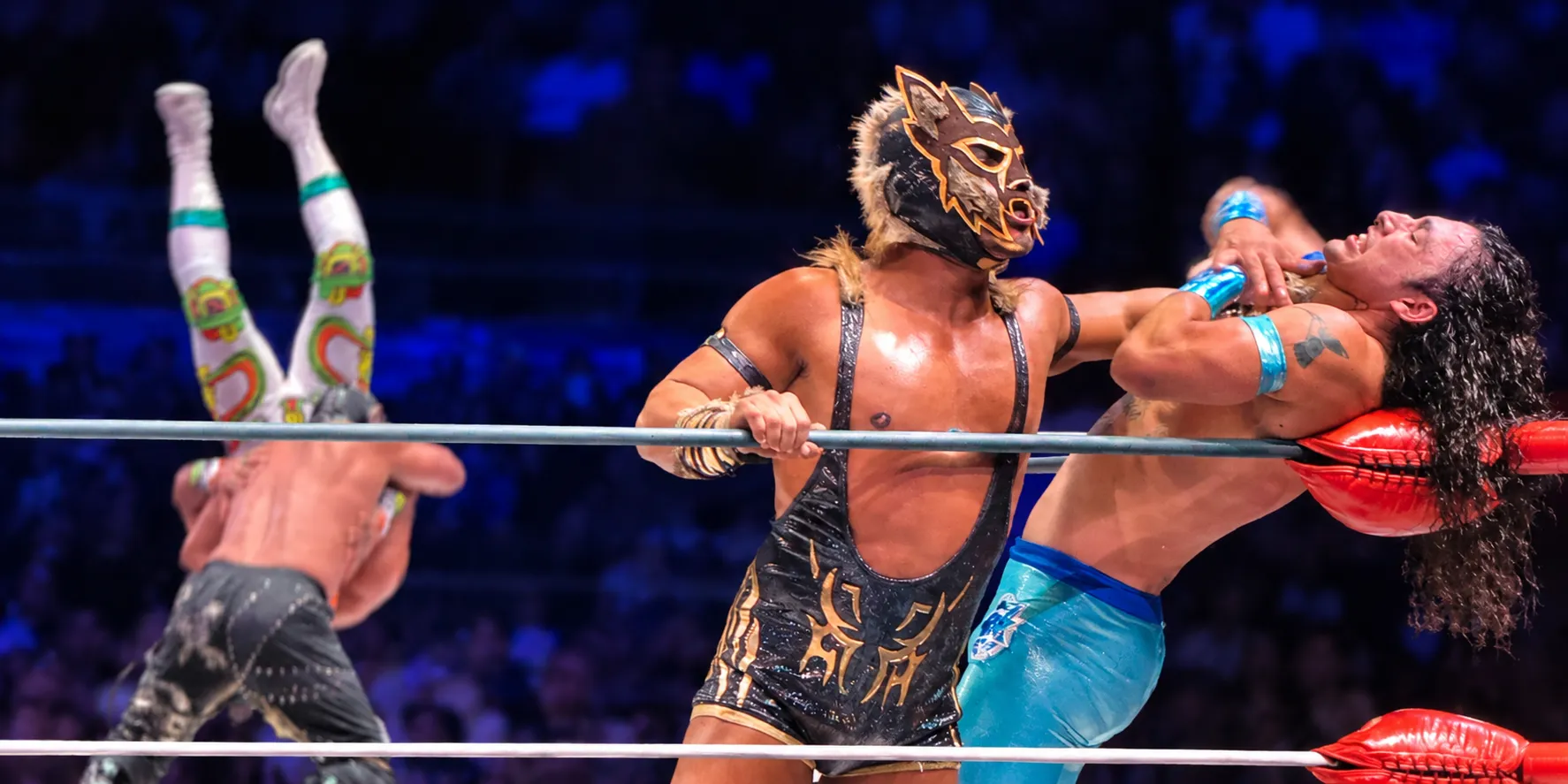
The entrances alone are worth the price of admission. The pomp, the posing, the costumes, the music, and the theatricality of it all. Wrestlers emerge like superstars.
Lucha libre wasn't exactly at the top of my Mexico City hit list. It was my kids who wanted to go, and I was happy enough to be persuaded. As it turned out, I unabashedly loved it.
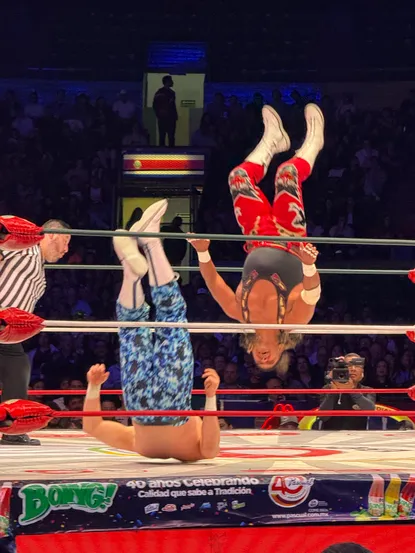
You do, however, need to be in the right mood. It's loud, it's wild, it's gloriously over the top, and you need to understand one thing from the outset: this is performance, not a series of genuine wrestling matches. The drama is choreographed, the characters are larger than life, and the spectacle is every bit as important as the wrestling itself.
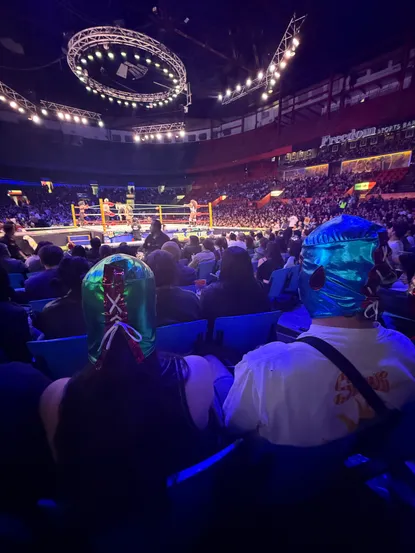
Our trip through Mexico had been a little harder on my daughter Olivia than the rest of us. She'd had a scooter accident a couple of days before she arrived, losing and breaking several teeth. It had been a painful experience, physically and emotionally, and eating with a mouth guard was no fun.
But that night, somewhere between the wrestling ring, the outrageous costumes, and the roaring crowd, something shifted.
Olivia was one of them. Proudly displaying her beautiful, hole-filled smile, striking muscle poses, and throwing herself into the spirit of the occasion. It was a joy to watch. After everything she'd been through, there she was, completely unselfconscious and having the time of her life.
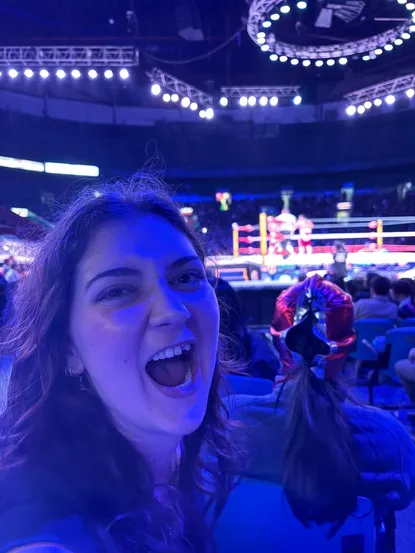
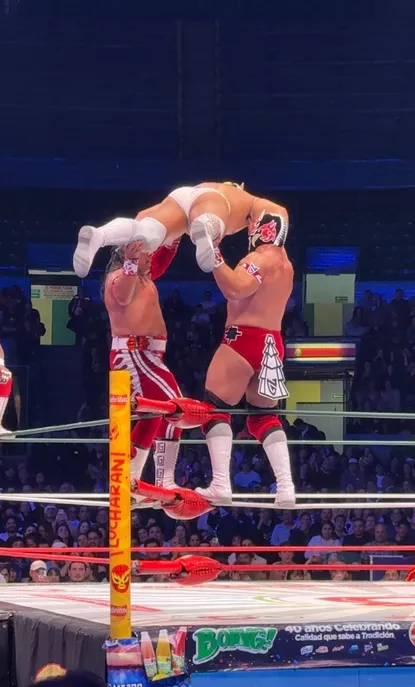
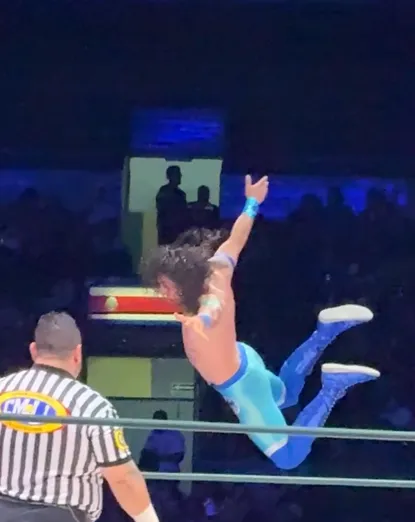
The evening gathered momentum. First came the women's matches. I have to confess, I preferred watching the men. There was a little less hair-pulling and rather more in the way of spectacular acrobatics. The physical feats became more ambitious as the night progressed, the choreography more elaborate, and the crowd increasingly invested in every encounter.
And here's the funny thing about knowing it's all a performance: it doesn't make it any less exciting. You still feel the punches, will the underdog to win, groan at the losses, and get swept up in the drama. You know the outcome is part of the show, but somehow you find yourself completely caught up in it anyway.
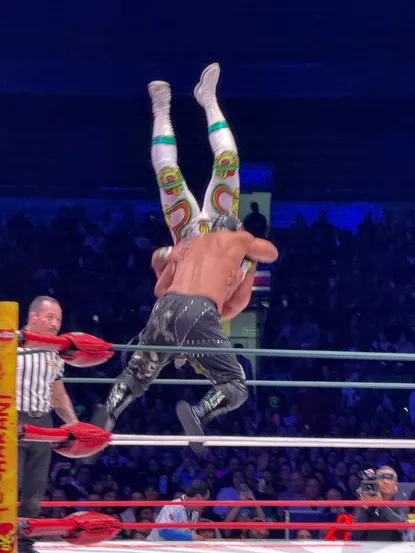
The entrances alone are worth the price of admission. The pomp, the posing, the costumes, the music, and the theatricality of it all. Wrestlers emerge like superstars, greeted by a wall of noise from an audience ready to cheer their heroes and jeer the villains.
It's a riot of color, movement, and noise. Good versus evil. Triumph and defeat. Extraordinary physical feats performed with impeccable timing.
And, quite unexpectedly, one of my favorite nights in Mexico City.
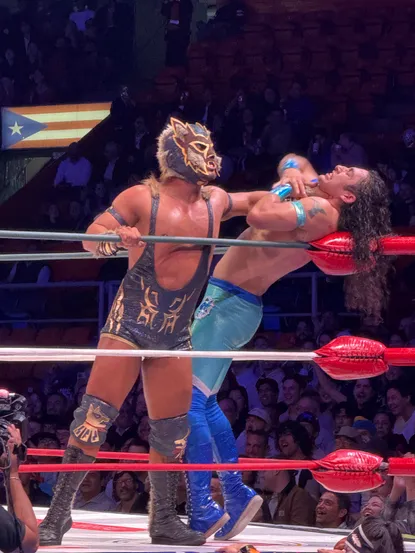
Behind the Mask: A Little History of Lucha Libre
Lucha libre, which translates as "free wrestling," stretches back more than a century. While professional wrestling traditions were brought to Mexico from abroad, the sport gradually developed its own distinctive character, combining athletic wrestling with acrobatics, theatrical performance, and larger-than-life personalities.
Modern Mexican lucha libre took shape in Mexico City in 1933, when Salvador Lutteroth founded Empresa Mexicana de Lucha Libre, now known as Consejo Mundial de Lucha Libre (CMLL). What followed was the development of a uniquely Mexican form of entertainment.
The masks.
Perhaps the most recognizable feature of lucha libre is its iconic masks. They transform wrestlers into almost mythical characters, concealing their identities while giving them a distinct persona. Some masks have become as famous as the wrestlers themselves.
Two of the most celebrated figures were El Santo, the Silver-Masked Saint, and Blue Demon, whose blue mask is instantly recognizable. Both became national icons, their fame extending well beyond the ring into films, comic books, and Mexican popular culture. El Santo, in particular, became something of a folk hero, fighting not only rival wrestlers but also vampires, monsters, and assorted cinematic villains.
The masks carry considerable significance. A wrestler's identity is often a closely guarded secret, and losing a mask in a special mask-versus-mask match is one of the ultimate stakes in the sport. It's not simply a costume coming off. It's the loss of a carefully cultivated identity.
The characters are divided into two camps: the técnicos, the good guys, and the rudos, the villains. The técnicos are the athletic heroes, while the rudos are the rule-breakers, troublemakers, and crowd provocateurs. Naturally, the audience takes sides, cheering, booing, and shouting encouragement or abuse with incredible passion.
In 2018, Mexico City officially recognized lucha libre as part of its Intangible Cultural Heritage, acknowledging its place in the city's cultural life.
Some more information
Lucha libre isn't confined to Mexico City. It's performed throughout Mexico, from Guadalajara and Puebla to Monterrey and beyond, with established promotions, regional circuits, and independent wrestlers. Mexico City, however, remains its historic heart, home to the legendary Arena México and some of the country's biggest wrestling events.
Matches aren't occasional performances. Major promotions stage events throughout the week, with Friday nights at Arena México drawing some of the biggest crowds. For many Mexicans, following their favorite luchadores is a family tradition, passed down through generations.
Going to Lucha Libre: Tickets, Costs & Tips
Where to go
The obvious choice is Arena México, known as the Cathedral of Lucha Libre. It's the home of Consejo Mundial de Lucha Libre (CMLL), one of Mexico's oldest and most established wrestling promotions.
Arena México
Dr. Lavista 189, Colonia Doctores, Mexico City.
There is also Arena Coliseo, a smaller, older venue in the historic center, with a more intimate atmosphere.
How much do tickets cost?
Lucha libre is surprisingly affordable. Ticket prices depend on the day, the event, and how close you want to sit.
As a general guide, expect to pay:
- Upper-level seating: MXN $100–200
- Mid-level seating: MXN $200–450
- Lower-level seating: MXN $400–700
- Ringside and premium seats: MXN $700–1,200+
For a family, you don't necessarily need the most expensive seats. The arena isn't enormous, and a slightly elevated position gives you a good view of the entire ring and the aerial moves.
When to go
Arena México typically hosts regular performances on Tuesday, Friday, and Sunday.
- Tuesday evenings are generally more affordable.
- Friday nights are the main weekly spectacle, known as Viernes Espectacular.
- Sunday afternoons offer an earlier, family-friendly option.
Showtimes vary, but Friday performances commonly start around 8:30 pm, with Tuesday shows around 7:30 pm and Sunday shows around 5 pm. Check the schedule before making plans.
Shows generally last around two hours, with several matches throughout the evening.
Where to buy tickets
Tickets can be purchased through Ticketmaster Mexico, the CMLL website, or directly at the arena box office.
I'd recommend booking ahead for Friday nights, particularly if you want seats together or close to the ring.
A few tips before you go
- Buy a mask! Vendors sell colorful wrestling masks outside the arena. It's part of the fun, and children especially love getting involved.
- Arrive early. Give yourself around 30 minutes to find your seats, browse the merchandise, food/drinks, and soak up the atmosphere.
- Choose your seats carefully. Mid-level seating is a good compromise between price and visibility. You don't need to spend a fortune to enjoy the show.
- Take some cash. It's useful for small purchases and souvenirs.
- Expect vendors inside. Food, drinks, and merchandise are available during performances.
- Plan your journey home. Arena México is in Colonia Doctores. Arrange a taxi or rideshare pickup rather than wandering around looking for transport after the show.
One family consideration: Check age restrictions and ticket requirements when booking, particularly if attending with younger children.