The flowers, food and traditions of Día de los Muertos in Mexico
One of my favorite times to be in Mexico is around Día de los Muertos. I'm not a religious person, although I'd like to think I'm spiritual, and there is something about this celebration that I find deeply moving.
I appreciate the way death is approached, not with an oppressive solemnity, but with color, music, food, flowers and the idea that those we've lost are never entirely gone.
Día de los Muertos, or Day of the Dead, is not simply a single day. The celebrations unfold over several days, with families preparing altars, visiting cemeteries, and making offerings for loved ones who have died. The main dates are November 1 and 2, although in some parts of Mexico the preparations and commemorations begin toward the end of October.
November 1 is traditionally dedicated to children who have died, often affectionately called angelitos, or little angels. November 2 is generally the day for remembering adults. The precise dates and customs vary between communities.
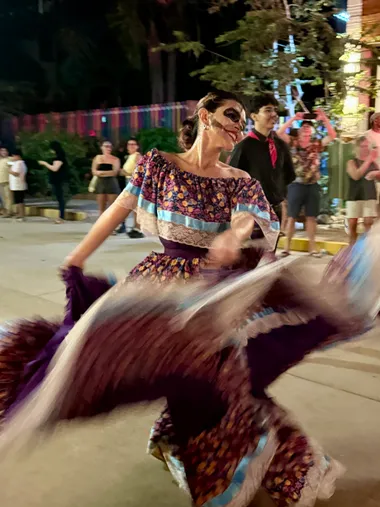
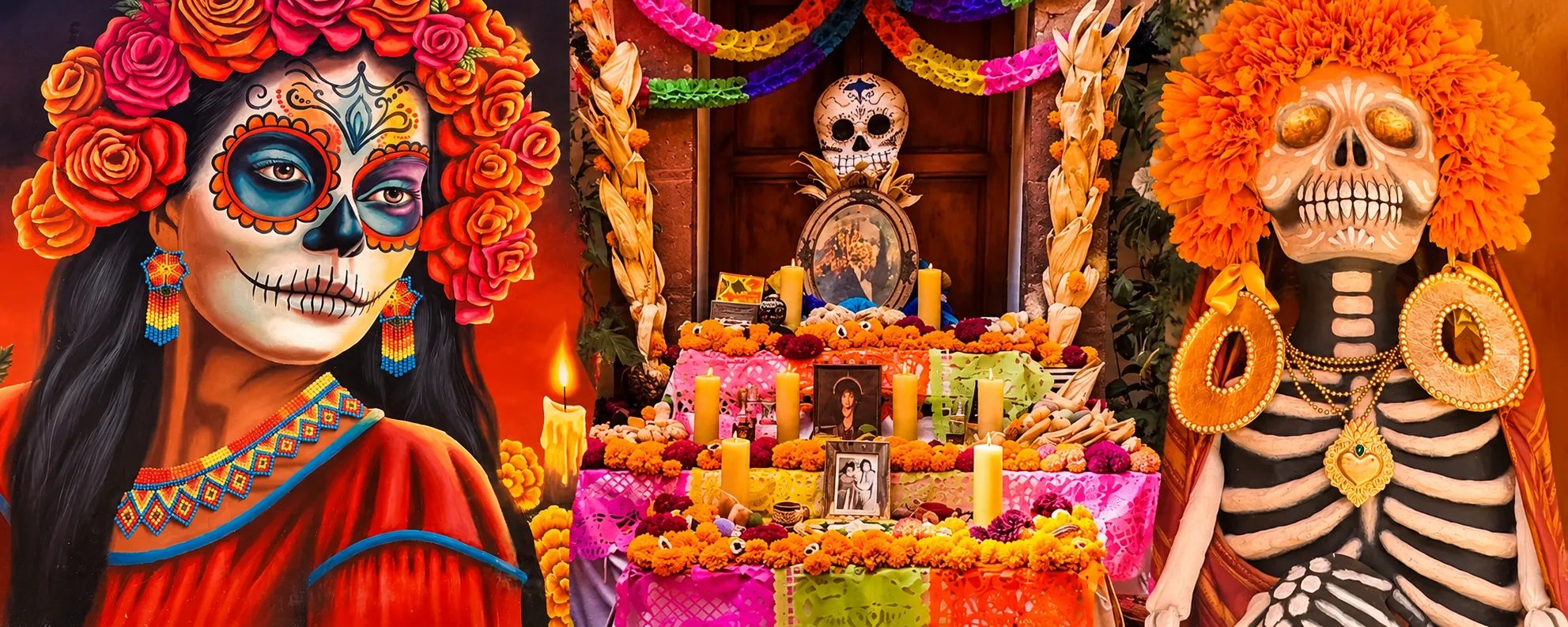
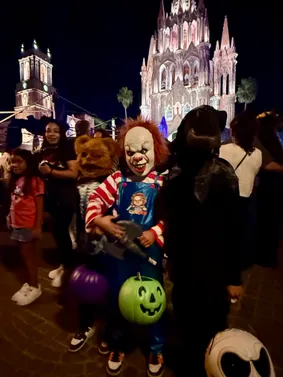
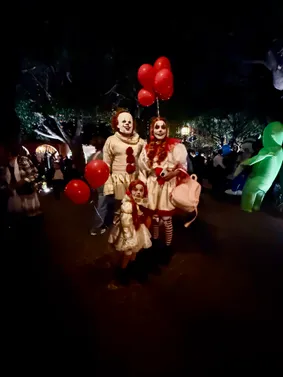
Halloween night brings its own wonderful spectacle. Mexican children take their costumes seriously, and I saw some amazing creations. Many dress as Catrinas and Catrines, the elegantly dressed skeleton figures so closely associated with Mexican culture, although this year in San Miguel de Allende I spotted plenty of Chuckys, too. The children absolutely love posing for photographs, and I have a whole lot of cuteness on my camera roll.
In San Miguel, the Jardín Allende, the town's main square in front of the Parroquia, becomes a gathering place for families. This year, a flamenco band was playing on a stage while children (trick-or-treating) and adults in their extraordinary costumes and families wandered through the square.
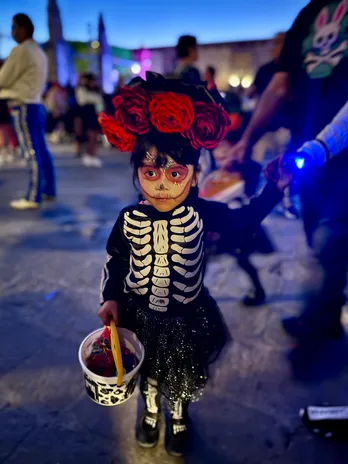
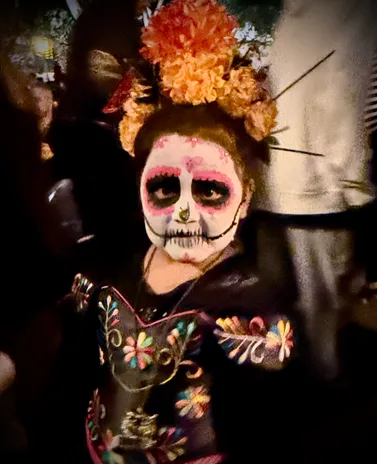
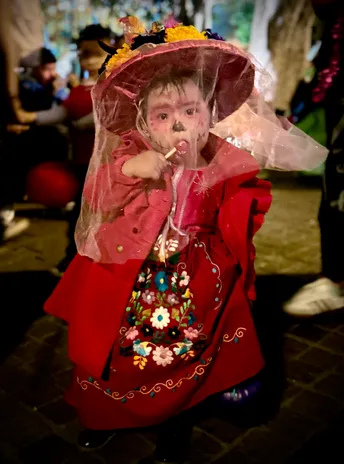
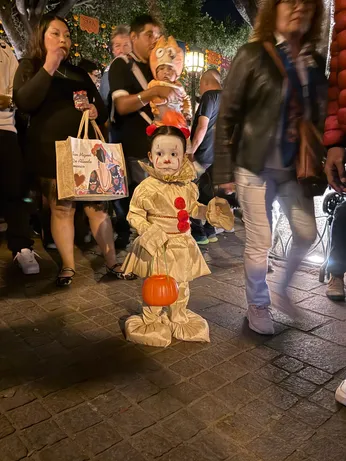
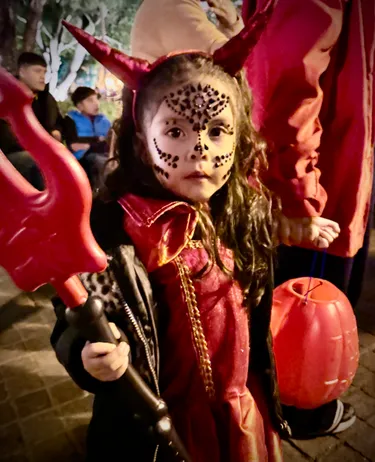
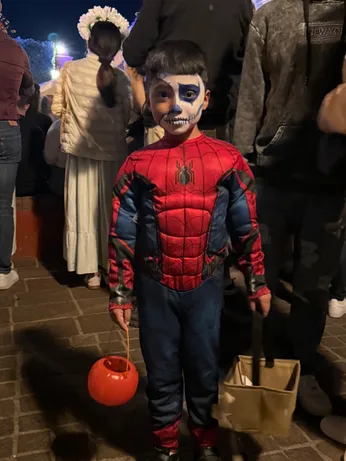
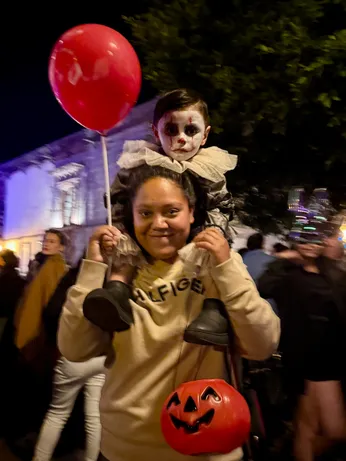
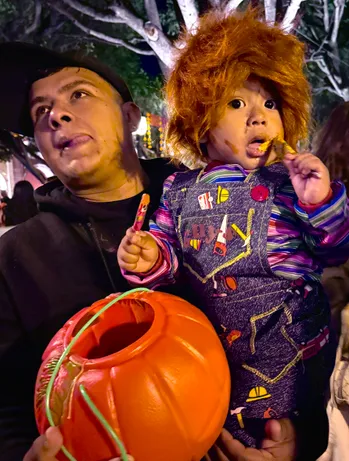
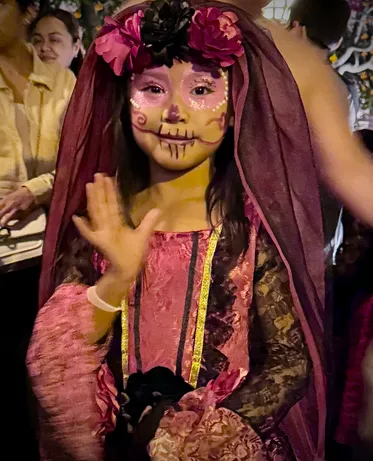
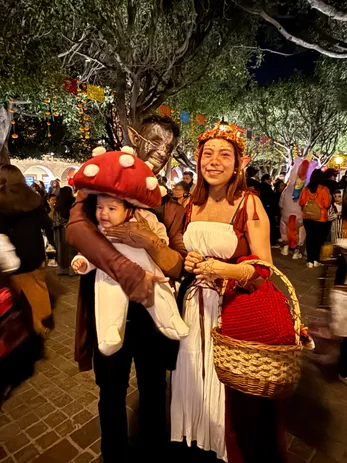
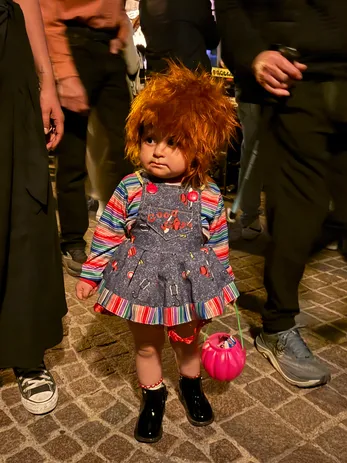
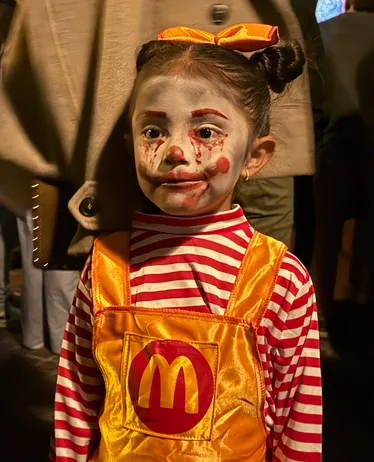
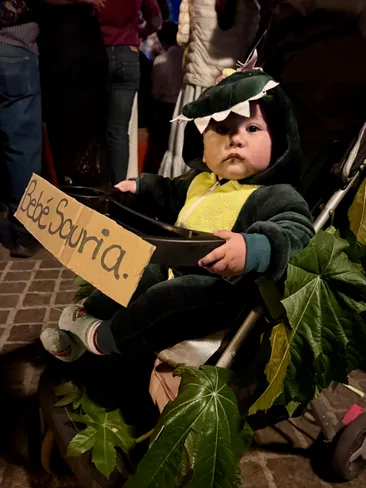
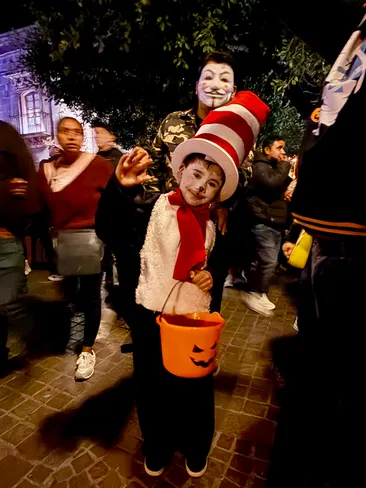
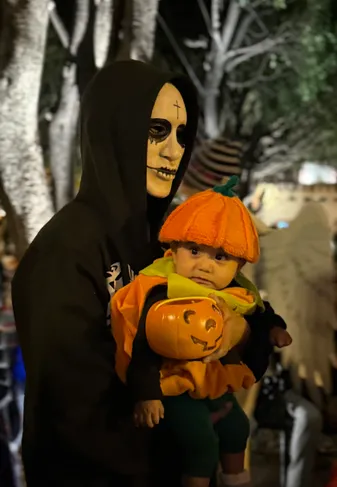
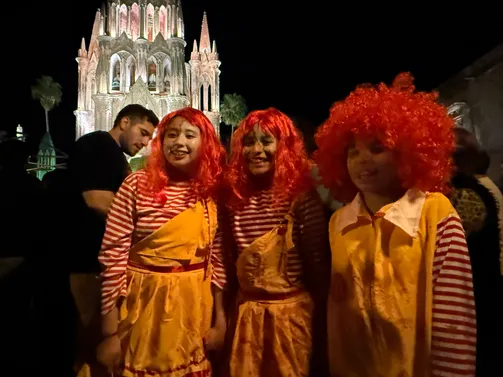
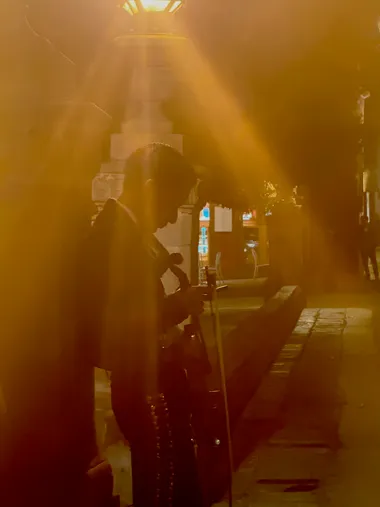
Last year, in San Pancho, I loved watching families gather around the graves of their loved ones. They spent the day eating, sharing food and barbecuing alongside those who had passed away. Mariachis played, music filled the cemetery, and families came together to remember, celebrate and spend time with their departed. Not just a quick visit, but days being together, keeping loved ones close, with food, music and family at the center of it all.
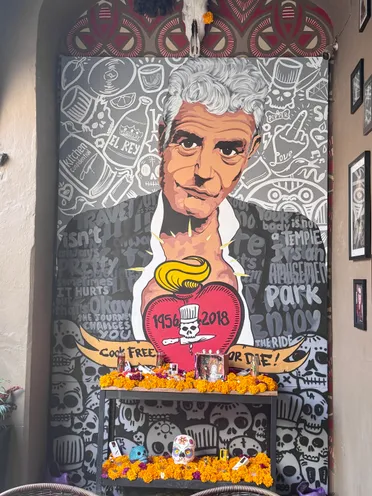
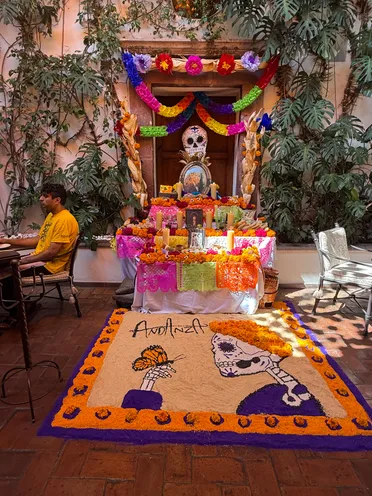
What I find particularly beautiful is the way the celebration brings together the everyday and the spiritual. Families create ofrendas, or altars, in their homes and at gravesides, filling them with photographs, candles, favorite foods, drinks, and flowers. These are not simply decorative displays. They are personal invitations to remember and welcome those who have gone before.
The art of the ofrenda: Sand, seeds and flowers
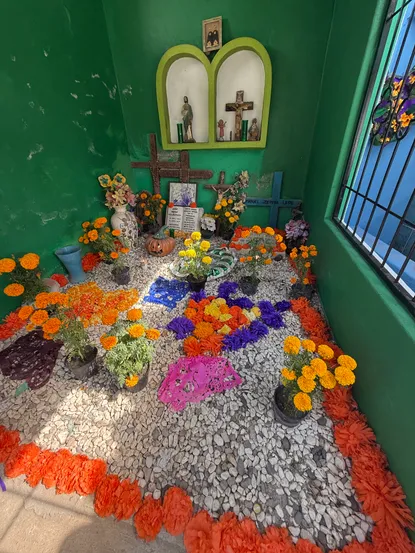
Some of the most intricate decorations you'll see during Día de los Muertos are these extraordinary pictures and patterns made from colored sand, sawdust, seeds and beans. Known as tapetes, they are painstakingly assembled by hand, sometimes using different grains, seeds and petals to create detailed images, borders and elaborate patterns.
The tradition has influences from both Indigenous Mexican practices and Spanish religious customs. Indigenous communities used flowers, seeds and colored earth in ceremonial displays, while the Spanish brought the tradition of decorative floor carpets for religious processions. Over time, these influences developed into the beautiful Mexican art of making tapetes.
During Día de los Muertos, these designs can appear around altars, in cemeteries and along pathways. They may depict skulls, skeletons, religious imagery, flowers or other symbols associated with the celebration. In some traditions, the paths are intended to welcome and guide the spirits of the departed.
In San Miguel de Allende, these displays can be seen around the Jardín on November 1-2. One of my favorite things was watching families and local organizations carefully put them together. There was so much time, effort, and care going into each design.
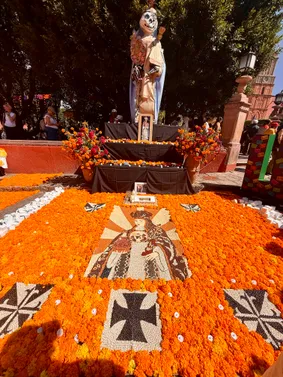
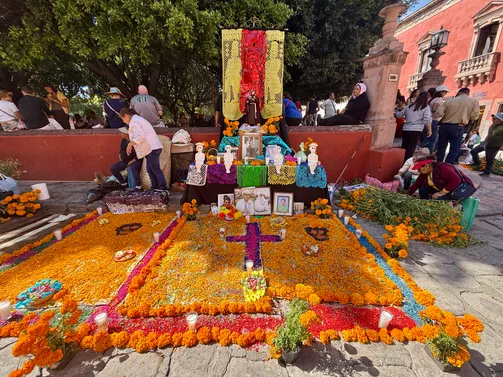
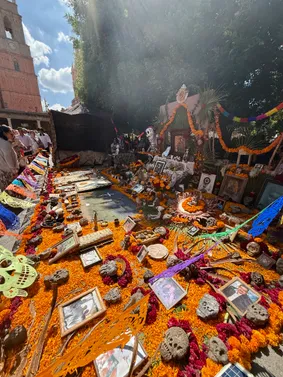
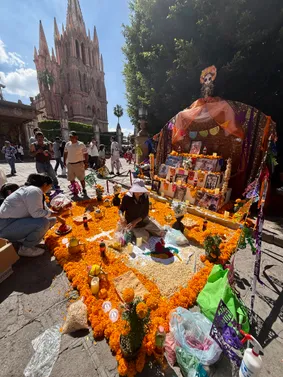
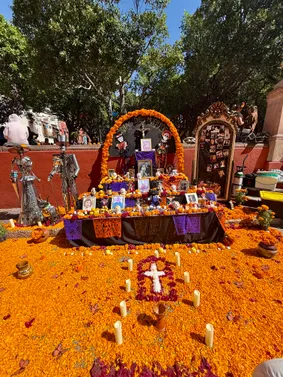
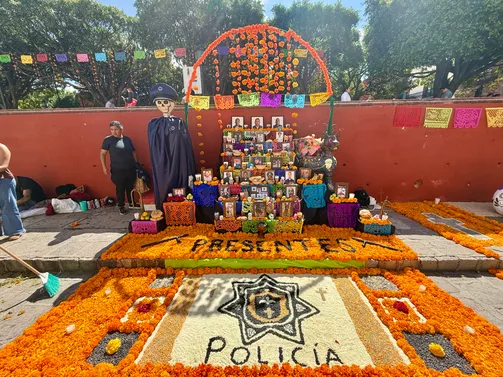
Part of their beauty is that they are temporary. These intricate designs may take hours or even days to create, only to be disturbed or swept away once the celebrations are over or if a blast of wind or a rainstorm passes by.
A celebration in orange
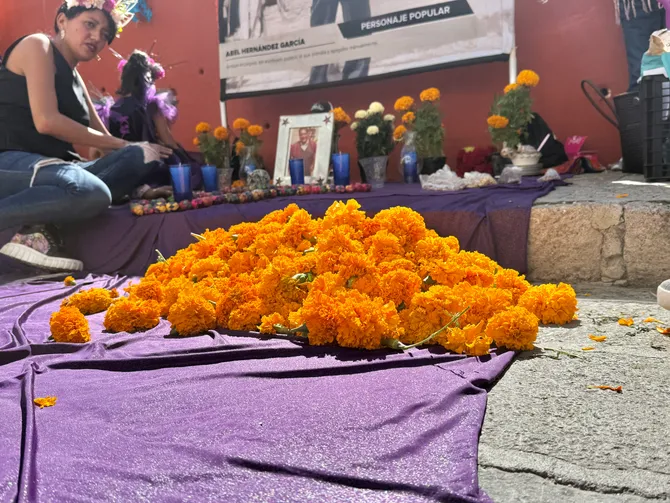
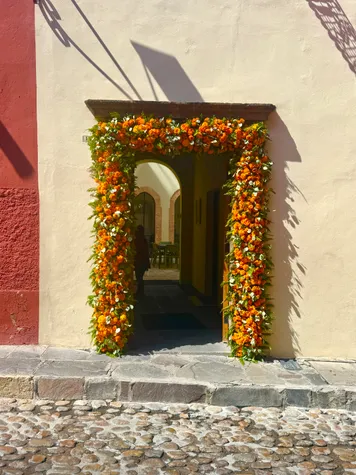
I love flowers, particularly orange flowers, and the abundance of them at this time of year is extraordinary. The streets and markets are filled with great bundles of cempasúchil, the vivid orange Mexican marigold that has become synonymous with Día de los Muertos.
Their color is spectacular, but they also have a particular significance. And they are edible, which makes them my favorite kind of flowers. According to tradition, their color and fragrance, although not exactly the sweetest, help guide the spirits of the departed back to their families.
Petals are scattered along paths leading to altars and graves, creating bright orange trails through homes and cemeteries.
There are other flowers, too, including velvety red cockscomb (which looks remarkably like little red brains), delicate white flowers and purple blooms. Together with candles, papel picado, photographs and food, they create some of the most beautiful displays imaginable.
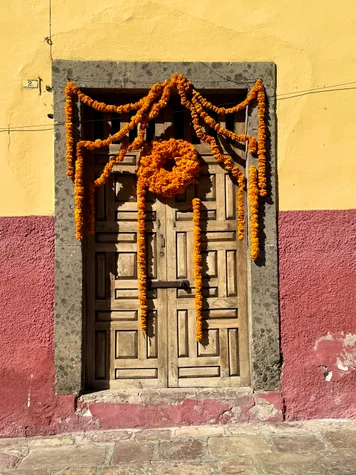
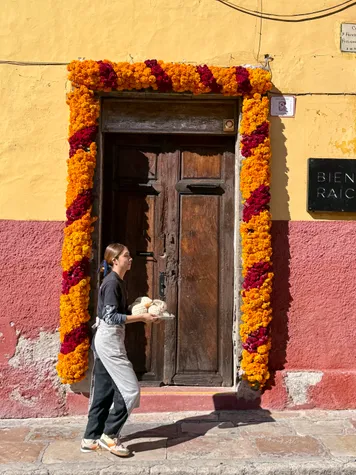
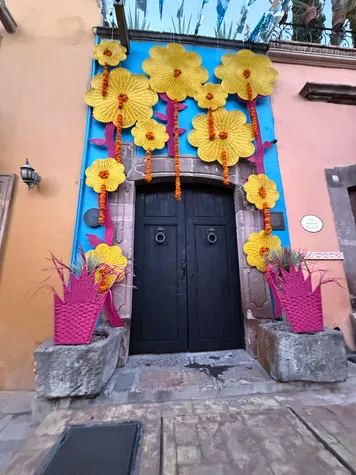
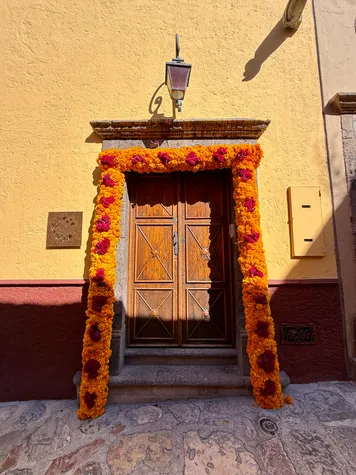
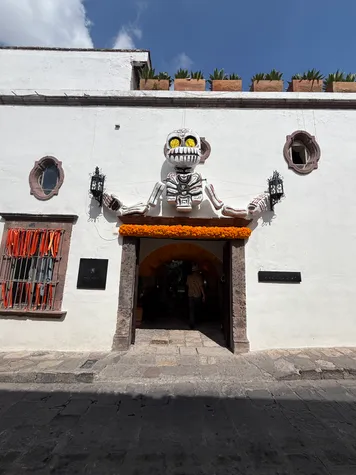
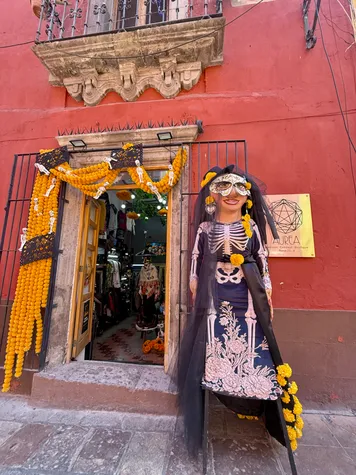
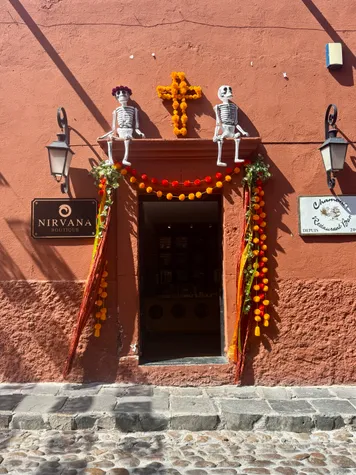
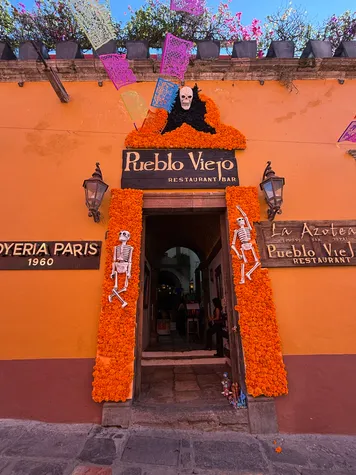
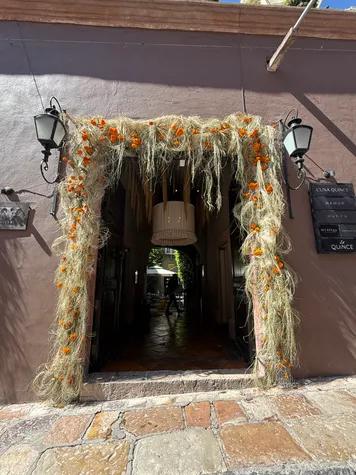
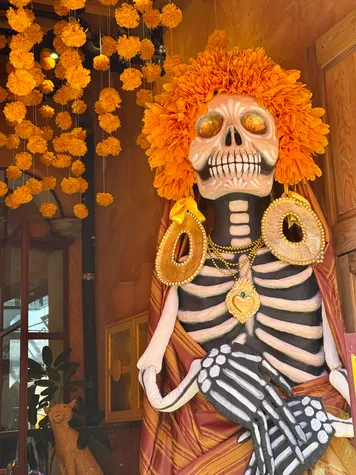
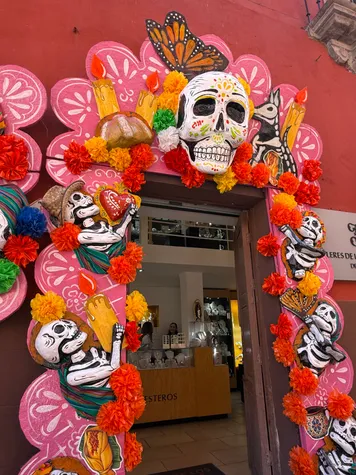
San Miguel de Allende is particularly good at decorating its doorways for the occasion. Grand wooden doors and old stone entrances are framed with elaborate arrangements of marigolds and other flowers, turning an ordinary walk through town into a succession of beautiful discoveries. I find myself stopping to photograph almost every one.
The symbolism of monarch butterflies
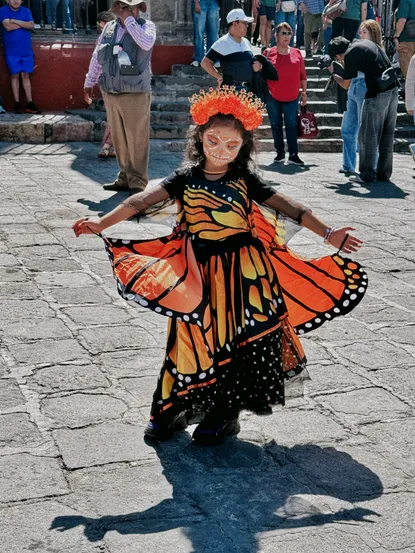
Another beautiful connection to Día de los Muertos is the arrival of the monarch butterflies. Every autumn, millions of monarchs make an extraordinary migration from Canada and the United States, traveling thousands of miles to spend the winter in the mountain forests of central Mexico.
Their arrival coincides with the Day of the Dead celebrations, and for some Indigenous communities, particularly the Purépecha of Michoacán, the butterflies are believed to carry the souls of departed loved ones returning to visit their families. They are sometimes described as the souls of the dead themselves.
It's a lovely association, and one that brings together the natural world and the spiritual traditions of Mexico. The monarch's brilliant orange and black wings also seem perfectly at home alongside the marigolds, candles and flowers that fill the ofrendas.
A good further read: The Smithsonian has a particularly interesting feature on this connection: Winged Messengers: How Monarch Butterflies Connect Culture and Conservation in Mexico.
Parades, Catrinas and a little irony
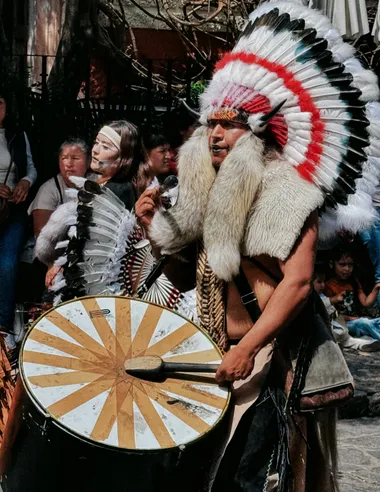
The Día de los Muertos celebrations spill out onto the streets, too, with parades, costumes and plenty of opportunity to join in.
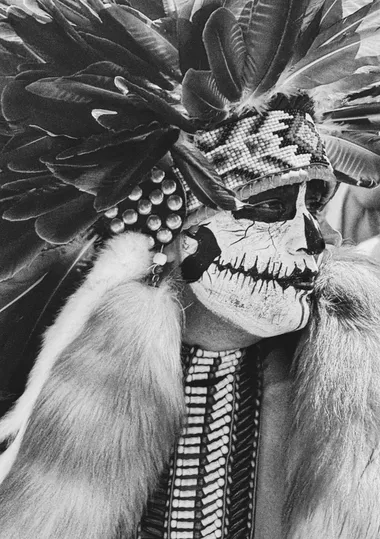
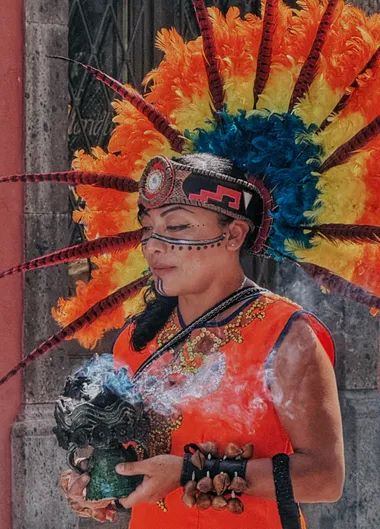
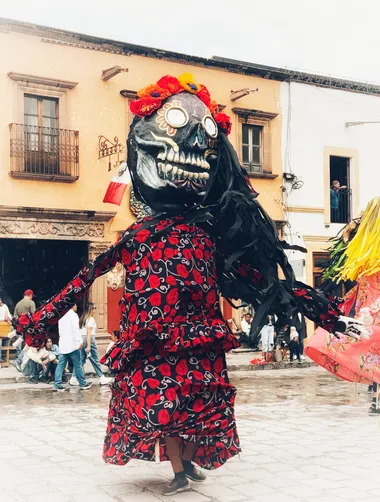
In San Miguel de Allende, the Catrinas parade on November 2 draws plenty of participants and spectators. Anyone can join in, provided they're dressed up. In the days leading up to it, makeup stands appear all over town, where you can have your face painted as a Catrina or Catrín, while vendors sell elaborate crowns, floral headpieces and other decorations.
There's also a little irony to it. Mexican illustrator José Guadalupe Posada created the original Catrina as satire of Mexicans who aspired to European aristocratic fashions, often at the expense of their Indigenous heritage. Diego Rivera later made the figure famous. So there's something rather amusing about seeing San Miguel's well-heeled foreign residents dressing up as elegant European aristocrats in skeleton form, perhaps without knowing the original joke.
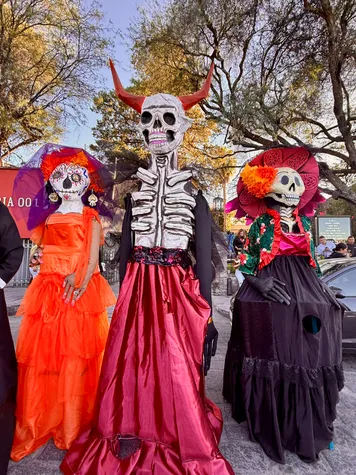
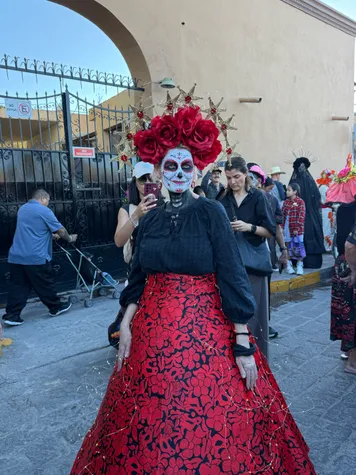
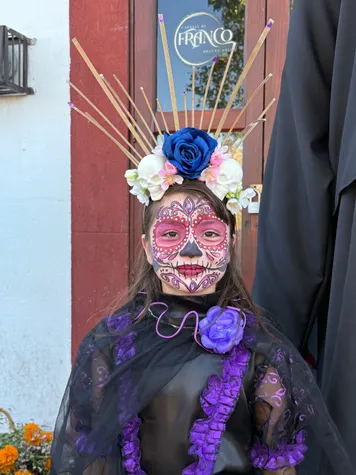
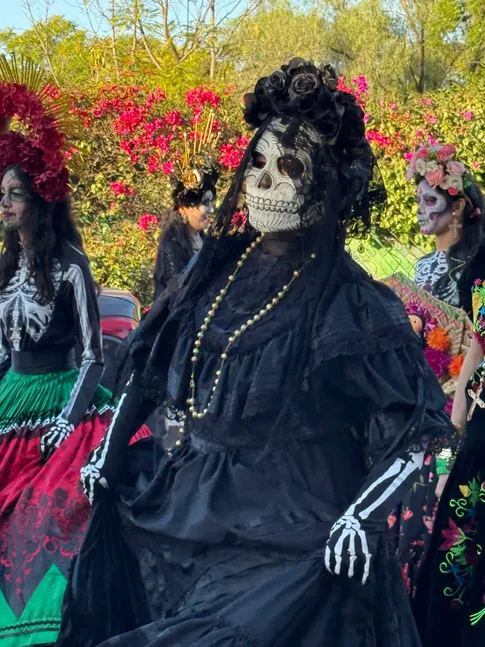
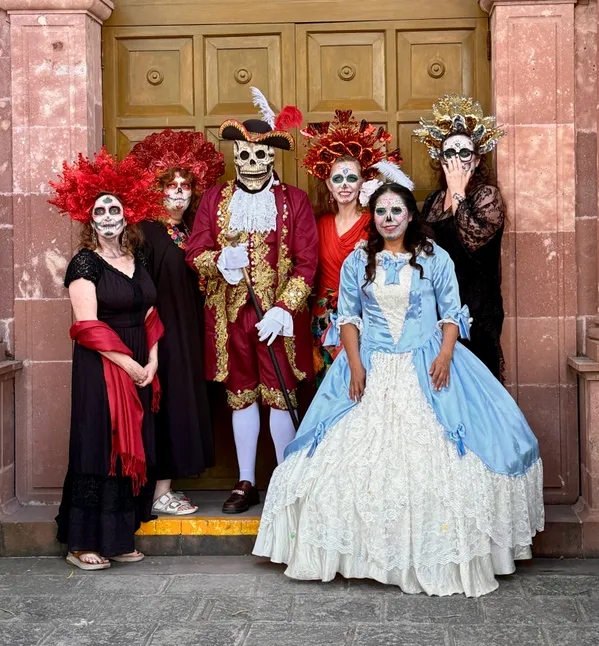
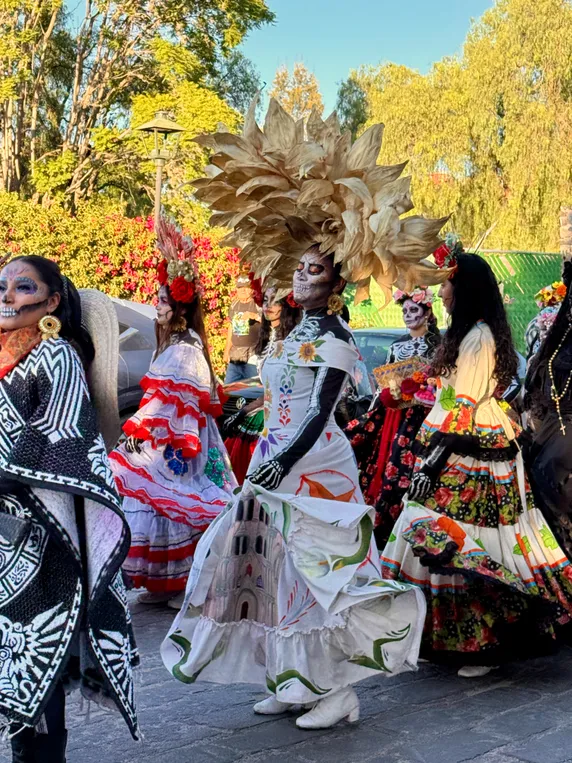
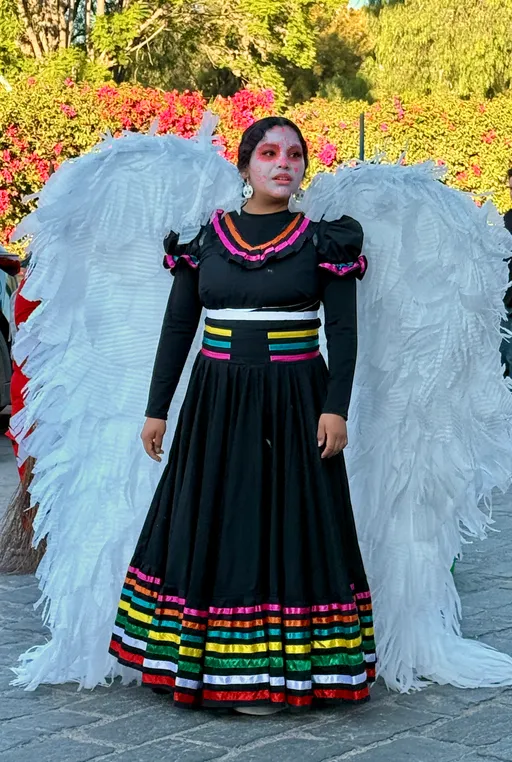
I particularly loved the parade in San Pancho the year before. It normally takes place in neighboring Sayulita, which is considerably larger, so there was some surprise when the decision was made to hold it in San Pancho instead. I think the local governing group had a hand in that decision, much to Sayulita's surprise! The locals in San Pancho were clearly thrilled, with flags and banners strung across the main street in preparation. There was just one small oversight: they were hung too low for the floats to pass underneath.
What followed was rather entertaining. The parade took hours as men with long poles had to lift each of the banners out of the way while the floats slowly made their way down the street. It was a little chaotic and rather improvised, but very funny and charming. It felt like a proper community affair, with everyone pitching in to make it happen.
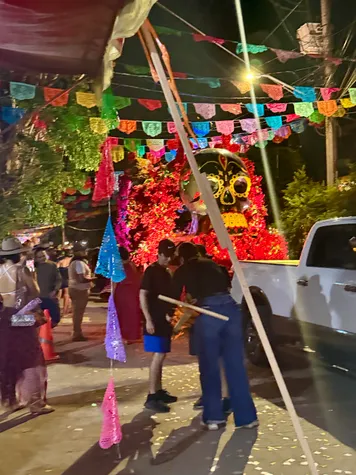
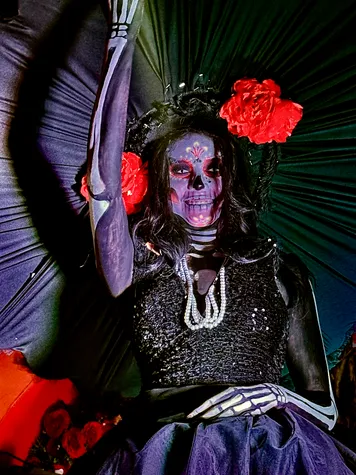
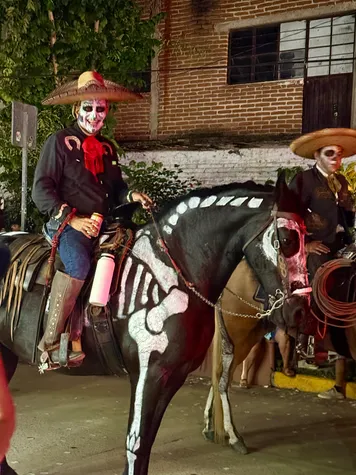
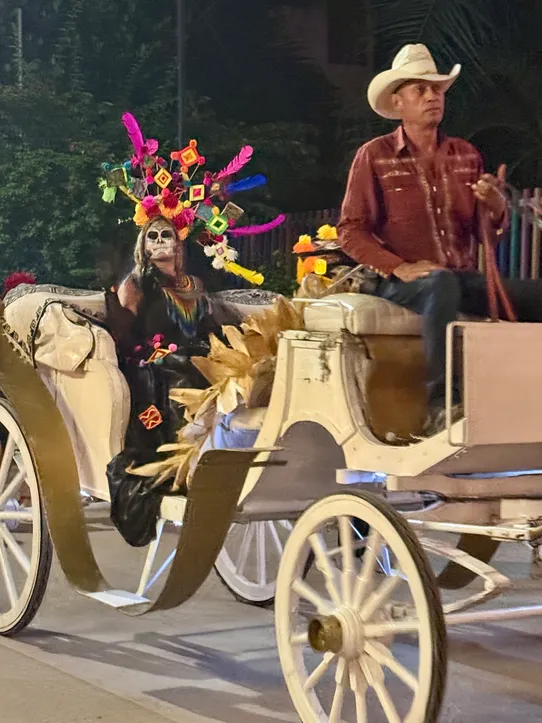
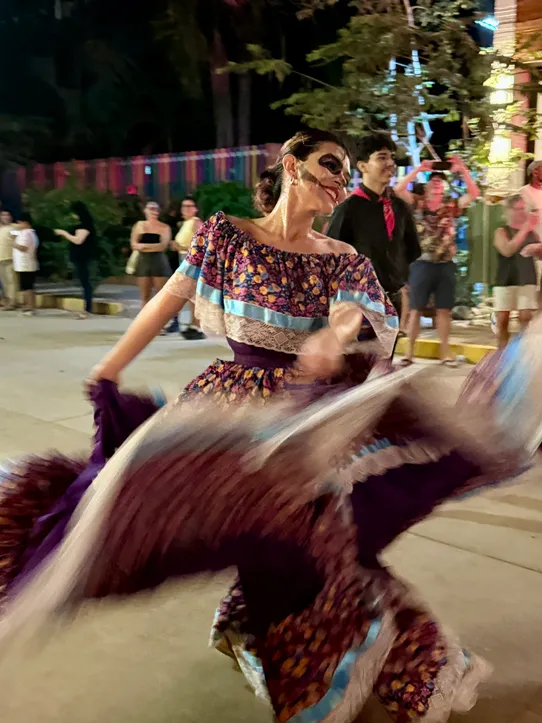
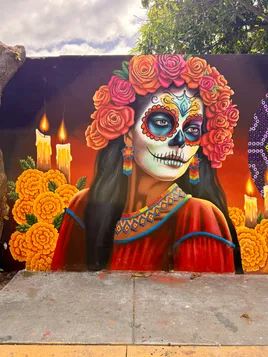
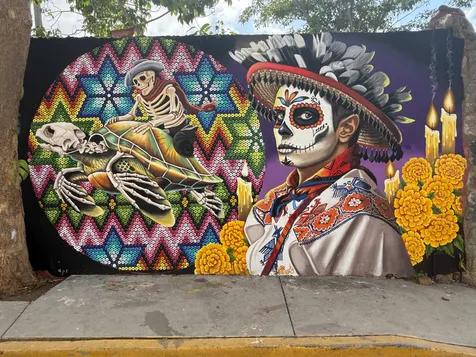
The parade was part of a much bigger artistic effort that year. The cemetery murals were being created by renowned Mexican muralist Humberto Valderrama, whom we had the pleasure of watching at work over the weeks we were in San Pancho.
Food as remembrance and connection
Food is at the heart of Día de los Muertos. Families prepare the dishes their loved ones enjoyed in life, placing them on altars as offerings. What appears on each altar is deeply personal, and the food varies enormously depending on the region and family.
There is pan de muerto, the beautifully decorated sweet bread made especially for the occasion; tamales, mole, seasonal fruit, sugar skulls, chocolate, and atole, a warm drink made from corn. Some families prepare elaborate meals, while others simply place a favorite dish or a glass of the drink their loved one enjoyed.
The idea is that those who have died return to spend time with their families, and that familiar food, aromas, and memories help welcome them home.
Sugar skulls
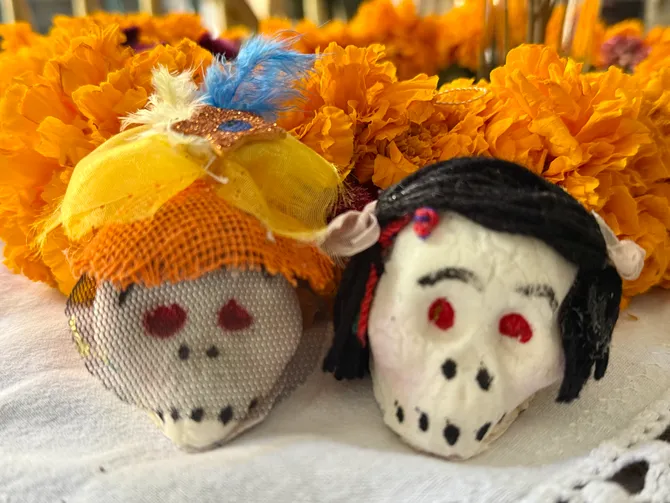
Another sight you can't miss at this time of year is the sugar skull. Markets and temporary stalls fill with vendors selling rows of brightly decorated skulls, made from sugar and covered in colorful icing, tiny flowers, glittering details and sometimes even little strands of hair. I came across a pair with what looked like proper hairstyles, which I thought was rather funny. They have so much personality.
Known as calaveras de azúcar, their history is a little more complicated than you might imagine. Skulls have been part of Mexican culture for centuries. Long before the Spanish arrived, the Mexica (Aztecs) and other Mesoamerican civilizations used skull imagery in religious art and ceremonies. One example was the tzompantli, a structure displaying rows of human skulls associated with ritual sacrifice.
The sugar skulls we see today developed much later. Following the Spanish conquest, Indigenous traditions of remembering the dead blended with Catholic observances such as All Saints' Day and All Souls' Day. European sugar-making techniques were also introduced, and Mexican artisans adapted them to create decorative sugar figures. Over time, these evolved into the elaborate, brightly colored skulls we see today.
Some are decorated with the names of loved ones and placed on family altars as offerings; others are given as gifts. They are a reminder that death is part of life, approached not simply with sadness but with color, affection and a little humor.
I particularly love the creativity of them. Some are quite simple, while others are tiny works of confectionery art. And those with cool hairstyles? Best of all.
Pan de Muerto: The Bread of the Dead
Of all the foods associated with Día de los Muertos, pan de muerto is perhaps the most recognizable. Walk through a Mexican bakery in the weeks leading up to the celebration, and you'll find these beautiful round loaves piled high, their tops decorated with strips of dough resembling bones and finished with a generous coating of sugar.
The bread is lightly sweet, soft, and enriched with butter and eggs, often scented with orange blossom water, citrus zest, or anise. Its shape and decorations carry symbolic meaning, although interpretations vary. The rounded loaf is often understood to represent the circle of life, while the dough arranged across the top evokes bones.
If you are reading this from afar and want to try making Pan de Muerto, I've found this traditional recipe by Mely Martínez, a Mexican food writer who shares the recipes and food traditions of her home country through Mexico in My Kitchen. It makes two large loaves or 16 smaller rolls, scented with orange zest and orange blossom water.
Find the recipe: Pan de Muerto by Mely Martínez, Mexico in My Kitchen
A little more about Día de los Muertos
If you'd like to explore the traditions further, here are a few films, books, and resources worth spending some time with.
Film
Coco (2017), Pixar
If you haven't seen Coco, it's wonderful. The film follows Miguel, a young Mexican boy who dreams of becoming a musician and finds himself transported to the Land of the Dead during Día de los Muertos.
It's a visual feast of marigold-covered pathways, colorful altars, music and beautifully imagined Mexican landscapes. Pixar spent several years researching Mexican traditions for the film, and the attention to detail is wonderful.
Books
The Skeleton at the Feast: The Day of the Dead in Mexico
By Elizabeth Carmichael and Chloe Sayer.
An illustrated exploration of the history, symbolism, art and regional traditions of Día de los Muertos. A particularly interesting book for anyone wanting to understand the cultural significance behind the celebration.
Skulls to the Living, Bread to the Dead
By Stanley Brandes.
An insightful look at the symbolism of skulls, bread and the changing traditions surrounding the Day of the Dead.
Further reading
- UNESCO: Indigenous festivity dedicated to the dead – an introduction to the cultural significance of the tradition and its recognition as intangible cultural heritage.