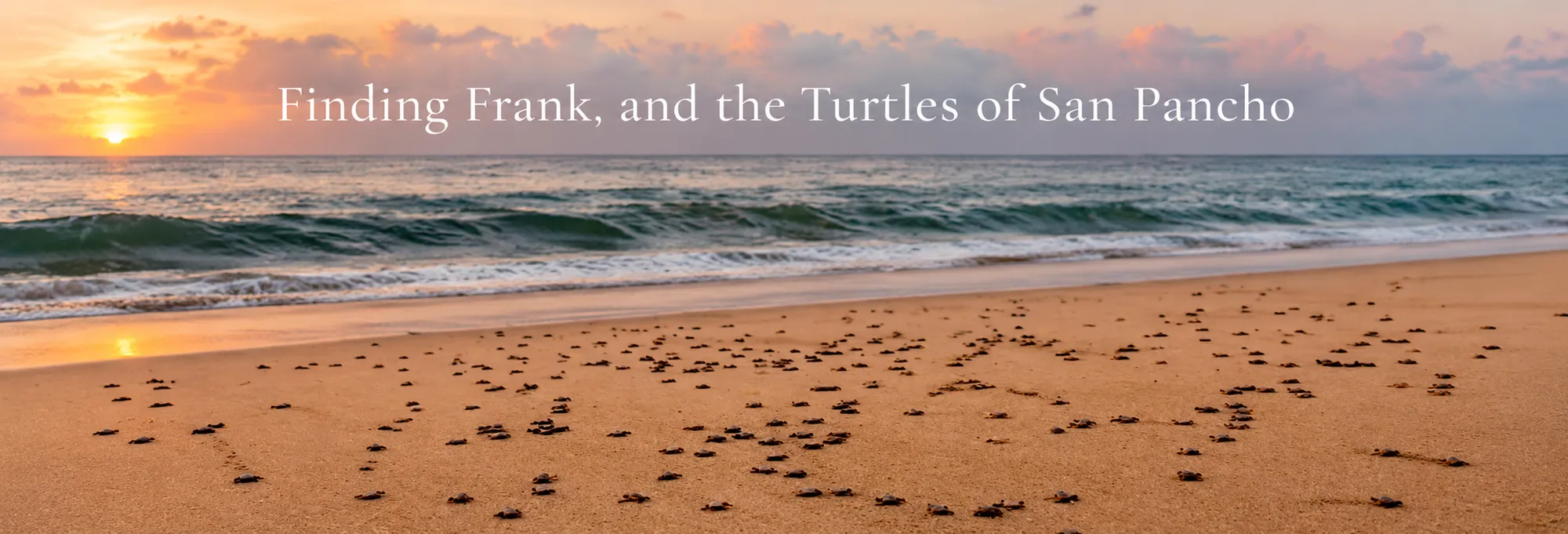
Finding Frank, and The Turtles of San Pancho
A population that had once numbered in the tens of thousands had dwindled to fewer than 200 nesting turtles a year. The situation was desperate.
There are connections in life that take a while to come full circle. Frank Smith was one of those interesting connections.
Frank was Noah's neighbor growing up in Idyllwild, a small mountain community in California. He was something of a local character, known for his unconventional ways, his love of the outdoors and, apparently, his rather memorable habit of hiking in the nude.
Years later, Frank moved to Mexico and found himself in San Pancho, a small Pacific beach town on the coast of Nayarit. What began as a new chapter in his own life became something much bigger. He devoted himself to protecting the sea turtles that came ashore to lay their eggs, eventually establishing one of the area's most important conservation projects.
It sounded like the perfect second act for a man who loved nature.
We had no idea quite how much of a mark he had left on San Pancho until we arrived.
A million little journeys
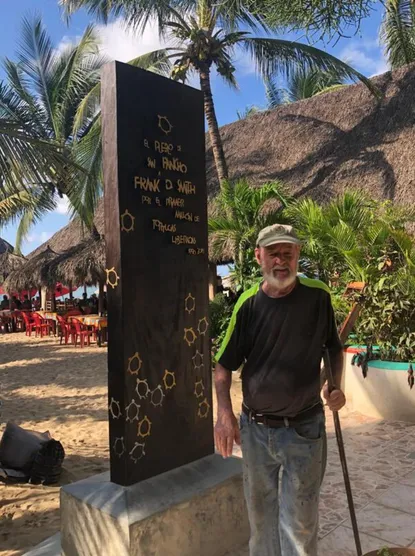
San Pancho's relationship with its turtles is hard to miss. At the entrance to the main beach stands a substantial commemorative monument dedicated to Frank D. Smith. It recognizes the first million turtle hatchlings released along this stretch of coast between 1990 and 2015.
It's quite something to encounter a monument to someone you know, particularly when you have only just arrived in town.
But to understand why Frank was honored, you have to go back to what the beaches looked like when he arrived.
There was a time when sea turtles were a familiar sight along this stretch of the Mexican Pacific. Older residents remember nights when hundreds would haul themselves out of the ocean to nest in the sand. By 1988, however, that picture had changed dramatically. Coastal development, commercial fishing, poaching and tourism had taken their toll. A population that had once numbered in the tens of thousands had dwindled to fewer than 200 nesting turtles a year.
The situation was desperate. When conservation efforts began, poachers and dogs were destroying an estimated 95% of turtle nests. Eggs were being taken from the beaches faster than the turtles could reproduce.
Frank, a retired US Forest Service employee, wasn't someone to sit around worrying about a problem. In 1992, together with Elvia García and other local volunteers, he helped establish Grupo Ecológico de la Costa Verde and San Pancho's first turtle nursery.
The idea was relatively simple: if the turtles couldn't safely incubate their eggs on the beach, the team would collect the eggs and move them to protected nurseries where they could hatch away from poachers and predators. But the work was anything but simple. It meant patrolling beaches at night, locating nests, carefully relocating thousands of eggs, monitoring incubation and eventually returning the hatchlings to the ocean.
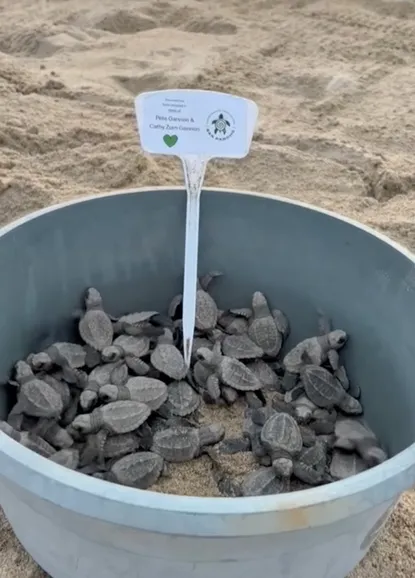
The results were remarkable. Over the next two decades, the number of recorded nests grew from around 200 to more than 1,170 in a season. In 2008 alone, the project recorded more than 100,000 eggs and released 76,789 hatchlings. And that was despite 71 nests, containing nearly 7,000 eggs, still being stolen that year.
By the time Frank's contribution was recognized with the million-turtle milestone, this was no longer a small volunteer effort. It had become an important part of San Pancho's identity and a remarkable example of what a determined local conservation project could achieve.
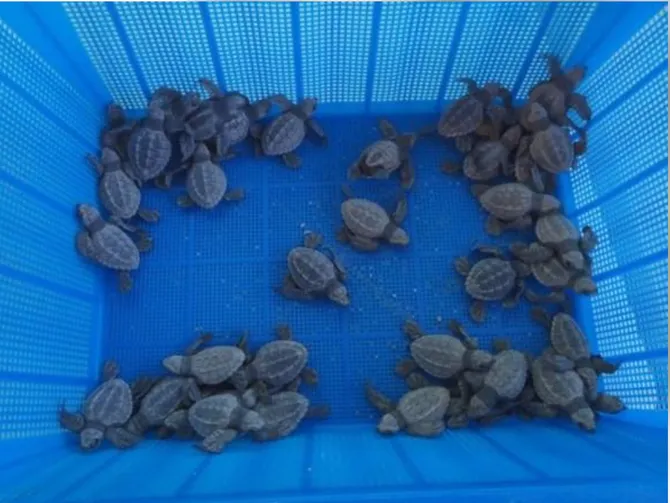
At turtle headquarters
On our second day in town, we stopped by the turtle project's headquarters, where Frank had once lived and worked. We met the new director, got a look around the nursery and, best of all, saw lots of tiny hatchlings.
We met a few of the volunteers, each with their own story. Some come for a single day; others stay for weeks or even months, giving their time to the project and getting involved in the daily work.
We spent time looking around the nursery and seeing the little hatchlings up close. It's one thing to read about turtle conservation, but quite another to see the operation firsthand and meet the people who give up their time to make it happen.
Frank may have started the ball rolling, but it takes a whole community to keep it moving.
Three sunsets and a beach full of baby turtles
We ended up taking part in three different turtle releases during our time in San Pancho, with friends and family joining us.
The releases are held around sunset, when the light begins to soften and the beach takes on that beautiful late-afternoon glow. Our trick was to spend the afternoon at the wonderful San Pancho beach club, looking out toward the ocean.
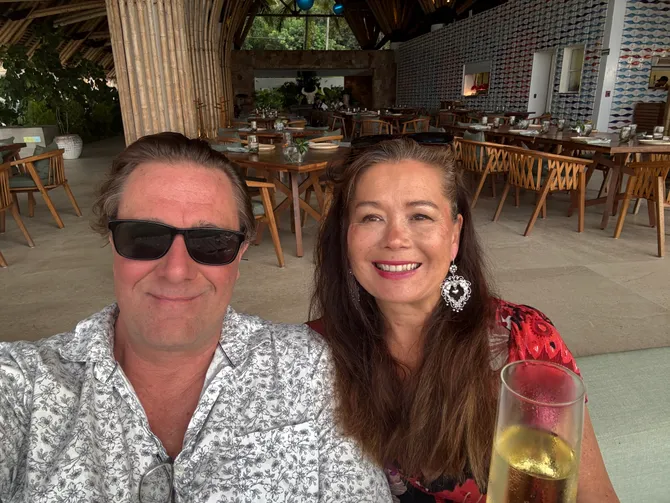
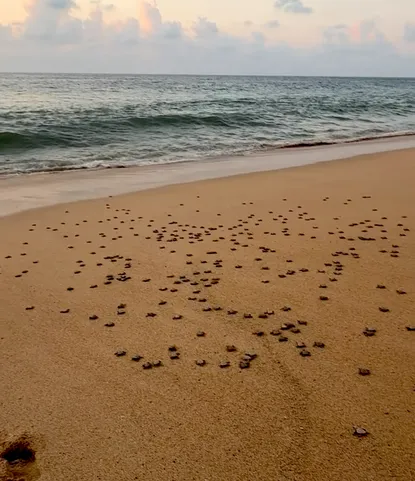
As the sun began to drop, we could see the volunteers gathering on the sand, forming a circle around the little hatchlings.
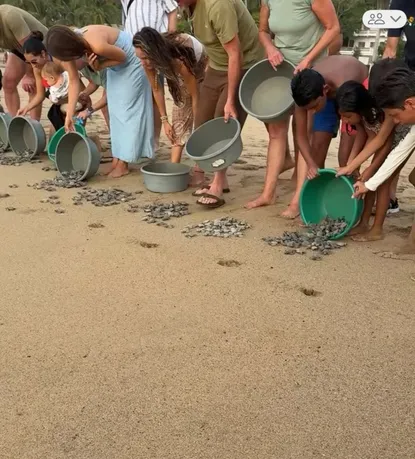
There is a lovely sense of anticipation as everyone settles in. The turtles are brought down to the beach and carefully placed on the sand, ready for their first journey toward the water.
And then they go.
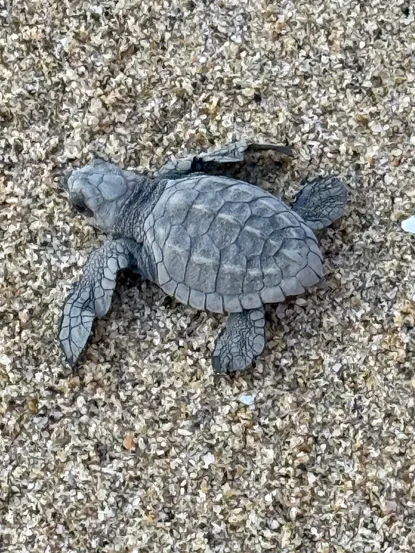
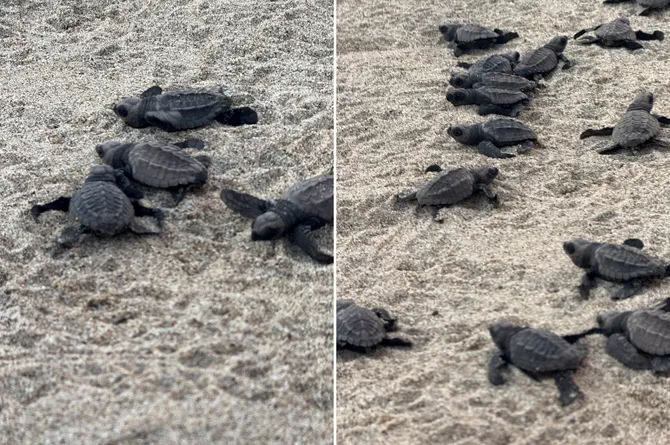
One by one, these impossibly small creatures begin making their way across the sand. Some head straight for the ocean; others seem to take a slightly more meandering route. Their tiny flippers work away, carrying them toward the waves.
You find yourself cheering them on, watching every little movement until they disappear into the surf.
It was one of those experiences that made us feel very lucky to be there.
Finding Frank
Of course, there was one more person we wanted to see.
Frank is older now and has stepped back from the day-to-day running of the turtle project. He still lives up the road in San Pancho, although we heard he was recovering from a leg injury. Tracking him down took a little local detective work, but in a town where seemingly everyone knows everyone, it wasn't too difficult.
We eventually found him, still living the relaxed San Pancho life, albeit temporarily slowed down by his injury.
Noah and Frank had a lovely catch-up. There is something special about reconnecting with someone from an earlier chapter of your life, particularly when you discover that they have spent the intervening years doing something so meaningful.
Turtle Conservation in San Pancho
The sea turtle conservation project in San Pancho is run by Grupo Ecológico de la Costa Verde, also known as Project Tortuga or Campamento Tortuguero San Pancho.
The organization operates a turtle nursery and conservation program in San Francisco (San Pancho), Nayarit, Mexico.
Website: https://project-tortuga.org/
Frank’s story in his own words.
More reading: https://gadling.com/2012/01/23/real-men-dont-eat-turtles-in-san-pancho-mexicos-coolest-beach
Turtle releases
- Public hatchling releases take place at the north end of San Pancho Beach, near Tierra Tropical Beach Club.
- Releases generally happen around sunset.
- The conservation team patrols the beach at night, collects vulnerable nests and relocates eggs to protected incubation areas.
- Incubation takes approximately 45 days.
- Release activity varies throughout the nesting and hatching season.
Visiting the project
- Public turtle releases are free to attend.
- Commercial tour groups are not permitted.
- Nest adoptions are available from approximately US$20, helping fund conservation work.
- The project's Casa Tortuga base is listed at Calle América Latina 102, San Francisco, Nayarit.
Season:
- June–July: Nesting season gets underway; the first hatchlings begin appearing.
- August–October: Peak nesting activity and plenty of hatchlings.
- November–December: Releases continue as later nests hatch.
- January: The previous season has generally finished and the turtle camp closes to visitors temporarily.
A few things to remember when attending a release
- Don't use flash photography or bright phone lights.
- Don't touch or pick up the hatchlings.
- Allow the turtles to make their own way to the ocean.
- Follow instructions from the conservation volunteers.