Museo Soumaya: Art, Architecture and a Story of Love
Museo Soumaya is architecturally one of the most interesting buildings in Mexico City, and well worth a visit simply to see the exterior. Before you have seen a single painting or sculpture, it has already made an impact.
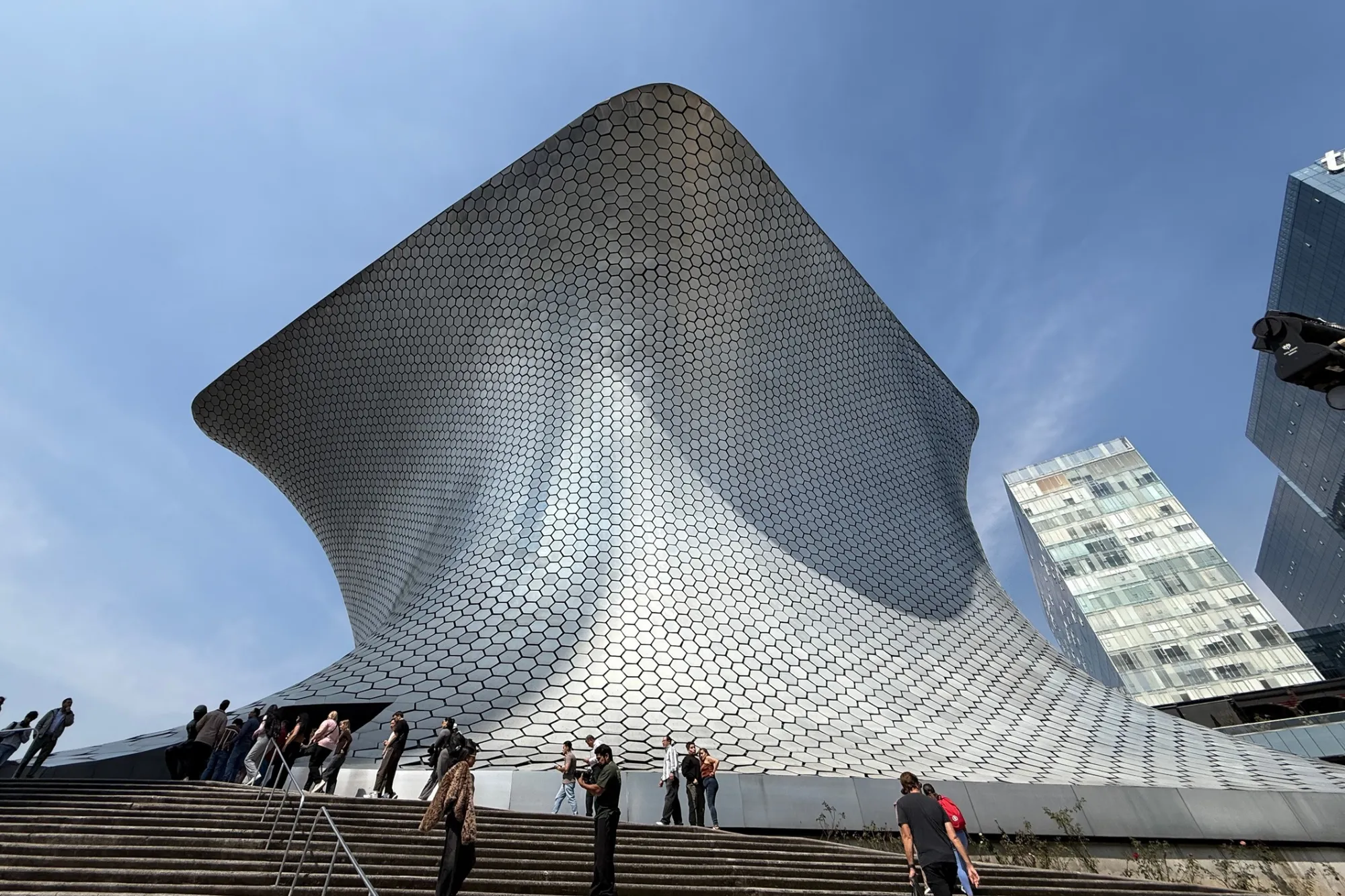
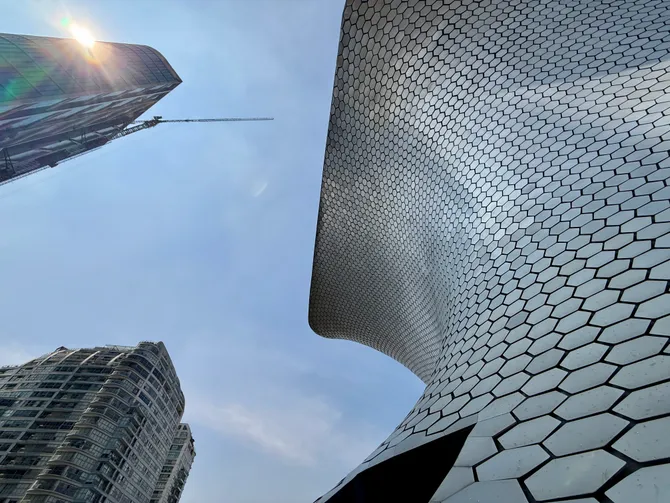
Set in Plaza Carso, in the Nuevo Polanco district, it is an extraordinary piece of architecture. Designed by Mexican architect Fernando Romero, the six-storey structure rises 46 metres, its twisting, asymmetrical form clad in more than 16,000 hexagonal aluminium panels. They catch and reflect the light differently throughout the day, giving the building an almost liquid appearance. From one angle it looks like a great silver vessel; from another, something futuristic and almost extraterrestrial.
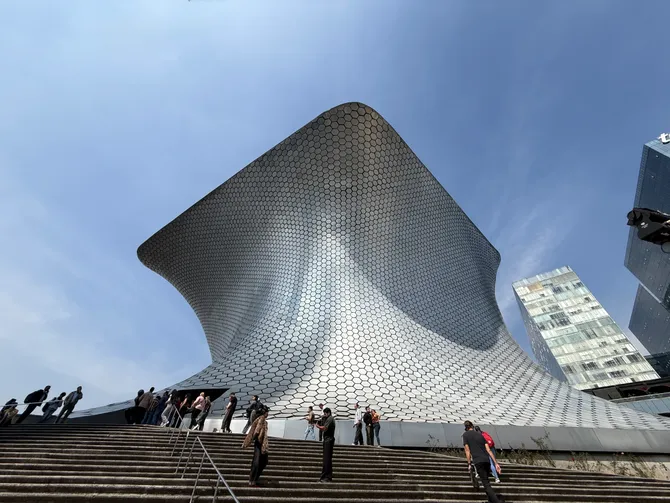
It is also something of a photographic attraction. Outside, you will find visitors carefully positioning themselves for the obligatory photograph, often with a boyfriend or partner crouching down to get the entire building into the frame.
Museo Soumaya is more than a striking piece of architecture. There is a love story behind its creation, which adds another dimension to a visit. Much like the Taj Mahal, though on a rather different architectural scale and with a very different collection inside, it is a public expression of private devotion.
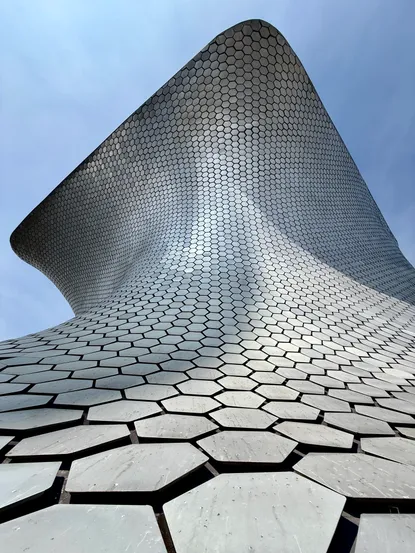
Opened in March 2011, the museum was commissioned by Mexican billionaire businessman Carlos Slim Helú, one of the world's wealthiest men, and named in memory of his wife, Soumaya Domit, who died in 1999. The couple had been married for more than thirty years and had six children. Slim established the museum to house and share his extensive private art collection through the Fundación Carlos Slim. It is a non-profit institution, and admission is free.
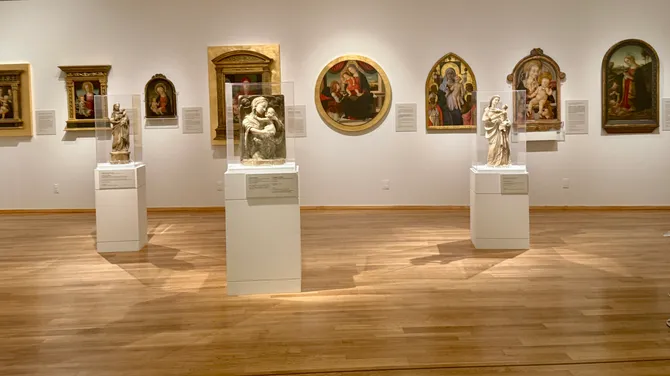
Inside, the collection is considerably more eclectic than the exterior might suggest. There are more than 66,000 works spanning 30 centuries, taking in European Old Masters, Mexican art, pre-Hispanic objects, New Spanish religious art, decorative arts and an extensive numismatic collection.
One of the principal attractions is the collection of Auguste Rodin, considered the most important outside France. His sculptures occupy the upper floor, alongside works that demonstrate his extraordinary understanding of the human form. There are also paintings by Monet, Renoir, Dalí, Matisse and Tintoretto, alongside Mexican masters Diego Rivera, Rufino Tamayo and José Clemente Orozco.
The interior has its own architectural interest. The six floors are connected by a continuous spiral ramp, an arrangement that immediately brings to mind Frank Lloyd Wright's Guggenheim Museum in New York. In fact, architect Fernando Romero drew on the Guggenheim's circulation design, although at Soumaya the ramp is primarily a means of moving between the galleries rather than a place to view the art. For you lazy ones, take the lift to the top and work your way down.
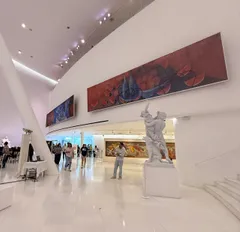
But before you even reach the galleries, the entrance atrium has quite a surprise in store. The enormous space is given over to monumental sculpture, including Michelangelo's celebrated Pietà, Rodin's The Thinker and his imposing Gates of Hell, alongside Laocoön and His Sons.
I must admit, at first glance I wondered why there were so many rather impressive fakes.
The reason is quite deliberate. Carlos Slim's ambition was to make some of the world's most celebrated works of art accessible to people in Mexico who might never have the opportunity to see the originals in Europe. The full-scale marble versions of Michelangelo's David and Pietà were commissioned for the museum and sculpted in Florence using Carrara marble from the same quarry Michelangelo used. They were made with the necessary permissions from Italian authorities and the Vatican Museums.
They are not being passed off as the real thing. Rather, the museum uses these carefully made reproductions to bring some of art history's most recognisable masterpieces within reach of a much wider audience.
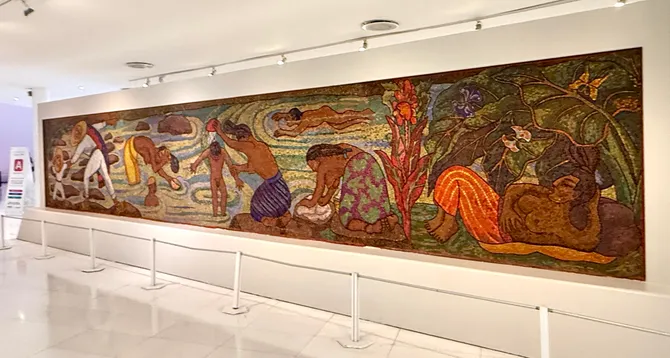
The lobby is also home to Diego Rivera's Río Juchitán, a monumental mosaic mural created between 1953 and 1956, towards the end of the artist's life.
Made from coloured Venetian glass, it depicts everyday life beside a river in Juchitán, Oaxaca, with women washing clothes, bathing and tending to their children. There is an interesting detail: the mural is double-sided, designed so that visitors can walk around it and discover the scene from both directions.
Rivera originally created the work for the garden of a private residence in Cuernavaca. It eventually found its way into the Soumaya collection, where it now occupies a prominent position in the entrance hall.
High above the entrance hall hang two striking murals by Mexican artist Rufino Tamayo, Naturaleza Muerta (Still Life) and El Día y la Noche (Day and Night), both painted in 1954. The first is a riot of warm reds and oranges, with a bowl of fruit and Tamayo's characteristic watermelons; the second takes a more cosmic turn, exploring the relationship between day and night through bold blocks of blue and colour.
Their history is rather lovely. Both were originally commissioned for a Sanborns restaurant in central Mexico City, where they decorated the dining room rather than a museum gallery. They eventually found their way into the Soumaya collection and now occupy a prominent position in the entrance hall. Not a bad setting for two works originally intended to accompany lunch.

Another rather unexpected collection at Museo Soumaya belongs to Lebanese-American poet, painter and writer Gibran Kahlil Gibran, best known for his book The Prophet. The museum holds an extensive archive of his personal and artistic life, including original manuscripts, correspondence, paintings, drawings, photographs and personal belongings.
The collection has an interesting history of its own. It was painstakingly assembled over many years by Gibran's nephew and namesake, Kahlil Gibran, and his wife Jean, who eventually entrusted the archive to the Fundación Carlos Slim in 2007. It is a remarkable body of material, offering a glimpse not just into the work of a celebrated writer, but into his private world.
What not to miss: Floor by floor
| Floor | What to look for |
|---|---|
| Entrance atrium (ground floor) | Rodin's The Thinker and The Gates of Hell, Michelangelo's David and Pietà, Diego Rivera's Río Juchitán and Rufino Tamayo's murals. |
| 1st floor | Decorative arts, gold and silver, coins, medals, ivory and historical objects. |
| 2nd floor | Temporary exhibitions. |
| 3rd floor | European and New Spanish Old Masters: El Greco, Tintoretto, Rubens, Murillo and Artemisia Gentileschi. |
| 4th floor | Impressionism and the Avant-Garde: Monet, Renoir, Degas, Van Gogh, Pissarro and Miró. |
| 5th floor | Mexican art spanning 20 centuries, including pre-Hispanic and colonial works and modern Mexican artists. |
| 6th floor | The Age of Rodin: extensive Rodin collection, Camille Claudel, Bourdelle and Salvador Dalí sculptures. |
A few practical notes
- Admission is free.
- Open daily, 10:30 am–6:30 pm.
- Allow around two hours, longer if you enjoy sculpture and painting.
- Official website: https://www.museosoumaya.org/
Museo Soumaya – Plaza Carso
Blvd. Miguel de Cervantes Saavedra 303, Granada, Miguel Hidalgo, 11529, Ciudad de México, Mexico.
- The neighbouring Museo Jumex is also worth visiting if you want to make an afternoon of art. A small museum of contemporary art, offering rotating exhibits in a bold, modern space.
Polanco: The Scoop on the Hood
Polanco is Mexico City's fancy, upscale neighborhood and decidedly less bohemian and green than Roma or Condesa, and considerably more polished and formal. Think embassy residences, corporate headquarters, luxury hotels, designer boutiques, and some of the city's most celebrated restaurants. It's where diplomatic types, international executives, wealthy Mexican families and the fashion crowd rub shoulders.
Developed largely from the 1930s, its streets are named after writers, philosophers and scientists, and you'll find everything from handsome older mansions and leafy residential avenues to contemporary apartment buildings and glossy commercial developments.
What Else to Do in Polanco
- Museo Jumex – Contemporary art, right next door to Soumaya.
- Avenida Presidente Masaryk – Luxury boutiques, designer shops and cafés.
- Parque Lincoln – Pretty leafy park, ideal for a stroll.
- Antara Fashion Hall – Open-air shopping, restaurants and cafés.
- Cafebrería El Péndulo – Beautiful bookstore and café.
- Polanquito – Charming streets around Parque Lincoln, full of restaurants and terraces.
- Lunch in Polanco – From traditional Mexican cooking at El Bajío to world-renowned Pujol.